
Why Zico Is One of Brazil's Greatest Players
Zico is widely regarded as one of the greatest footballers in the history of Brazil, one of the most football-mad countries in the world. He was a natural talent who stood out in his hometown from a very young age and grew to become a Flamengo legend. Despite not winning the World Cup with Brazil, he was part of some of the Brazilian national teams remembered for their style and way of playing, which, unfortunately, never materialized into a World Cup title. His stardom extended beyond the pitch, as he also helped the country professionalize its football in Japan, for example.
Zico during an All-Star game in 2019
Zico's Early Life and Rise at Flamengo
Arthur Antunes Coimbra, which is his full name, was born on March 3, 1953, in Quintino Bocaiuva, Rio de Janeiro. From a young age, he was given the nickname Zico, which came from the diminutive of Arthurzinho. His father, who arrived from Portugal at the age of 10, combined his work in a bakery with his hobby of playing football as a goalkeeper. Young Arthur grew up in a football-loving family, where, in addition to his father, two of his five brothers (Zico was the fifth of six) also played football: Edu, a left winger for América, and Antunes, a striker for Fluminense. Zico, when he was already an established star, emphasized the importance of having two brothers who played football, as it prepared him for the challenges he would face in his professional career.Until the age of 14, he played futsal, where he was a very prominent player in his area. At that age, America, the club where his two brothers played at the time, was going to give him a trial. However, someone from Flamengo saw him in one of his futsal matches, where Zico stood out, and offered him a trial with Flamengo. Zico, being a fan of the red and black team, declined the trial with America and accepted the offer to try out with Flamengo. The process was far from being immediate though, his participation with the club in official tournaments had to wait almost two years. Despite having a lot of talent, his thin and weak physique raised doubts at Flamengo, which led them to focus on his physical development.
In 1971, at the age of 18, the highly experienced Paraguayan coach, Manuel Fleitas Solich, gave him the opportunity to debut with the first team and, in fact, played him in several matches, even though he also played for the youth team. However, the Paraguayan only stayed at the club for a year, and his replacement was Mario Zagallo, who considered Zico still too young to play for the first team. It wasn't until 1973, at the age of 20, that Zico finally established himself in Flamengo's first team, thanks to the arrival of Joubert, who had been his coach in the youth teams and gave him the confidence he needed to showcase his talent.
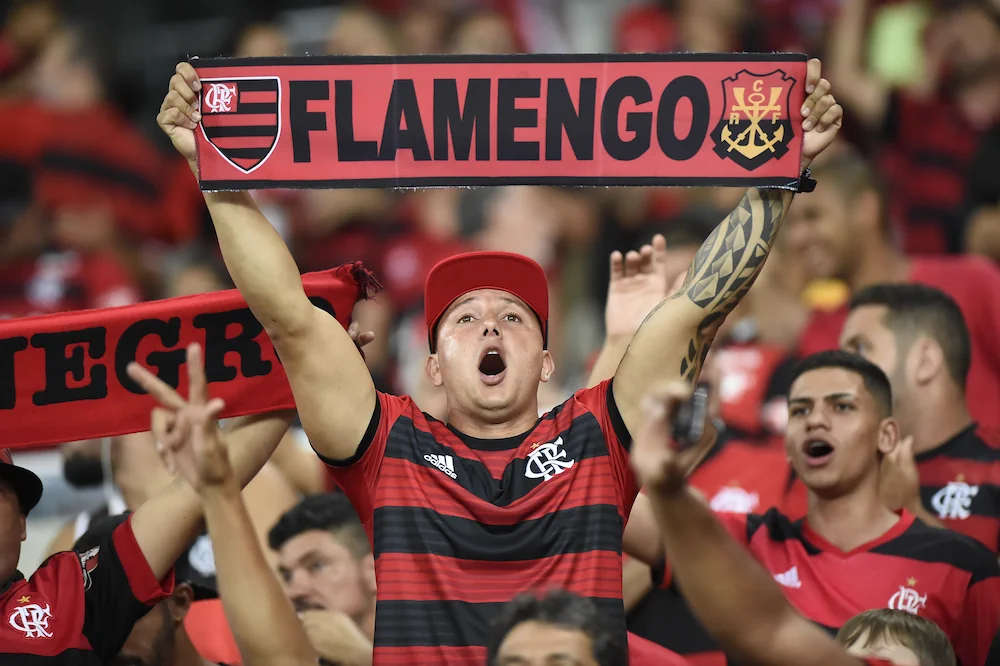
How Zico Became a Flamengo Legend
Zico was nicknamed the White Pelé for a time; however, his playing style differed from that of the Brazilian legend, as Zico was more of a creative player. In fact, they would have been complementary players. That said, Zico had a knack for scoring goals and possessed an excellent shot, both from open play and free kicks.Flamengo were already one of the strongest in their region, having won the Carioca Championship many times, but it wasn't until 1980 that they finally won the Brasileirão, a title they would repeat in 1982 and 1983, led by Zico. Also, in 1981, they won the Copa Libertadores in their first appearance, as well as the Intercontinental Cup, defeating Liverpool, featuring Bob Paisley and Kenny Dalglish, by a resounding 3-0 victory.
Zico and Brazil at the 1982 World Cup
In 1976, he made his official debut with the senior Brazilian national team, and in 1978 he participated, in a somewhat secondary role, in the FIFA World Cup in Argentina, where they finished third. That Brazilian team was in a kind of transition between that brilliant generation of the 70s, led by Pelé, and the one that Zico himself would later lead.At the World Cup in Spain in 1982, according to Zico himself, he felt closest to winning the cup with Brazil. They had a team with players like Sócrates and Falcão, and a coach like Telê Santana, and with all those big names in the team they played a very attractive style of football. In the first group stage, they won all three of their matches comfortably, defeating Scotland, New Zealand, and the Soviet Union. However, the challenge came in the second group stage when they were drawn against Italy (the eventual champions) and Argentina, featuring stars as Maradona, Kempes, and Passarella. Ultimately, they finished second after beating Argentina but losing to Italy 3-2, with Paolo Rossi scoring a hat-trick.
Next stop - Italy
In 1983, several European teams, mainly Italian, came knocking, remembering that at that time Serie A was the most important league in the world. While there was interest from Milan and Roma, it was Udinese who made the strongest bid, paying around 4 million dollars, making it one of the most expensive transfers in football history at that time. The operation was so astonishing due to the amount of money invested that it was even temporarily frozen while the Italian Federation investigated the source of the funds.Ultimately, the signing was completed, generating great excitement in Udine, although in the two seasons he was there, they remained mid-table. It's worth remembering that he was competing against teams like Maradona's Napoli or Platini's Juventus, to name just a couple. Despite this, he left a great impression at Udinese because of his style of play.
In 1985, he returned to Flamengo, although a serious injury prevented him from achieving the same level of importance he had shown to the club during his first stint. Nevertheless, he finished his time at Flamengo as one of the club's most-capped players and its all-time leading scorer. In 1986, he was part of the Brazilian squad that played in the World Cup in Mexico, where they were eliminated in the quarterfinals on penalties by Platini's France.
Zico's Legacy in Japanese Football
In 1989, he retired (temporarily) from professional football, and in 1991 he took on a government role as Brazil's National Secretary of Sports before returning to football in Japan. At that time, the Japanese league was not professional, and the country sought Zico as a leading figure to promote football in the country and help them professionalize the league. Thus, in 1991, Zico signed with Sumitomo Metals, which, after turning professional in 1992, became Kashima Antlers. A year later, Zico helped Kashima become one of the leading teams in the new professional era, and his impact in Japan went far beyond trophies alone.In 1994, he retired from football, although he would return, this time to beach soccer, where he would become a world champion with Brazil in 1995.
In the following decades, Zico would have very varied roles always related to football since he created his own football academy in Brazil, he has been technical director and advisor of Kashima Antlers, he has been manager of several clubs such as Fenerbahce, CSKA Moscow or Olympiakos in addition to coaching national teams such as Japan or Iraq.