
The Underrated Greatness of Jupp Heynckes
German football has provided the sport with some of the best players and teams in history, but one of the most underrated figures that came out from that nation is certainly Jupp Heynckes. Mostly known from his coaching days, he also had a very successful career as a forward, becoming one of the country's signature players in the 70s.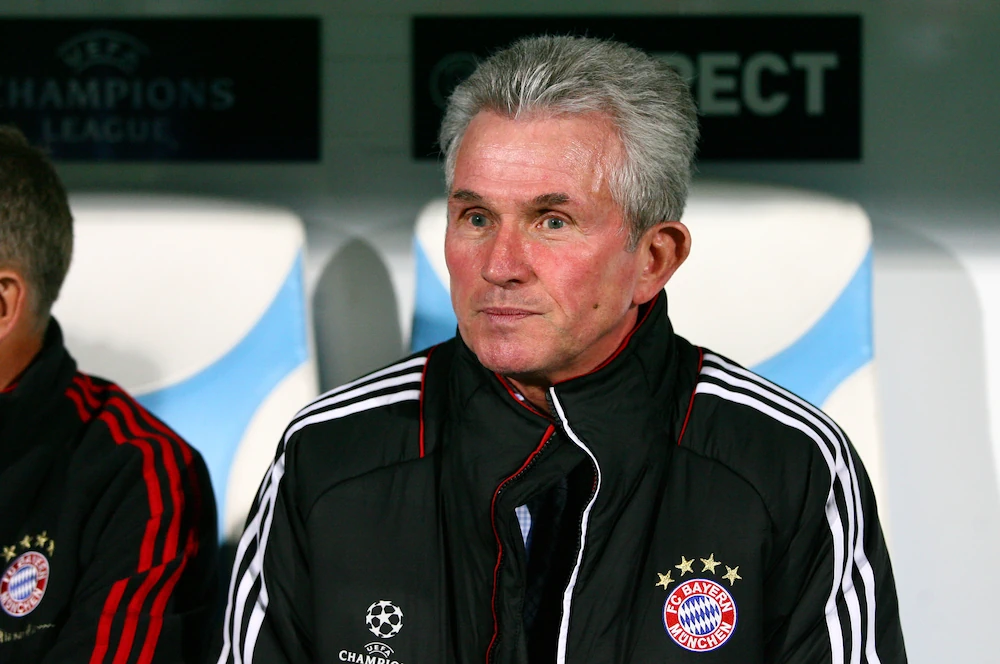
©
This is the life and career of Jupp Heynckes.
Playing Days
Born in Mönchengladbach, Germany, on May 9, 1945, Josef "Jupp" Heynckes would begin his footballing career with Borussia Mönchengladbach in 1963. During the next four seasons, Heynckes would increase his prominence, scoring regularly, and earning himself a move to Hannover 96 in 1967, playing there for three years and having decent outputs, although not at the degree he had with his hometown club. After his period in Hannover, he returned to Mönchengladbach in 1970 and played there for the rest of his career.When discussing Jupp Heynckes' career as a footballer, it is his 70s era where most people are familiar with his accomplishments. He was one of the deadliest forwards in the history of German football, perhaps having the misfortune of having coincided in this era with Gerd Muller. Be that as it may, Heynckes would deliver time and time again with Borussia Mönchengladbach, never scoring less than 16 goals per season for the remainder of his career.
When it comes to his time with the Germany national team, he scored 14 goals in 39 appearances for his country. Not bad at all, but certainly the numbers he could have provided as the main man. However, as mentioned earlier, this is also due to the fact that he was competing for a position with Muller and the latter was arguably the best striker of the entire decade and one of the greatest of all time.
Heynckes would retire in 1978, having won with Borussia Mönchengladbach a total of four Bundesliga titles, a DFB-Pokal, an UEFA Cup, and reaching the 1976/77 European Cup final, which was a major milestone for the institution.
Jupp Heynckes started his career as a manager in Borussia Mönchengladbach
Managerial Days
Heynckes' managerial career might be one of the longest serving in the entire history of football when considering that he started in 1978 as Mönchengladbach's assistant coach, contributing to the team winning the UEFA Cup during the 1978/79 season. After that title he took over as the club's main coach, only 34 years old. During the vast majority of the 80s, Heynckes would coach the team until 1987, and while he didn't win any trophies with them during this period, he had them constantly competing for the first place and aiming for European qualification.Once he joined Bayern Munich in 1987, he would stay there for four years, winning two Bundesliga titles and also starting a very positive relationship with the German giants that would continue for decades.
Years abroad and his time at Real Madrid
Moreover, the 90s would be an interesting time for the German since, for the first time in his football career, he would go abroad. This would include stints with the Spanish clubs Athletic Bilbao and Tenerife while also having a short season with Eintracht Frankfurt, although most people are mostly familiar with this 1997/98 with Real Madrid.Despite an underwhelming fourth place in La Liga, Heynckes would lead Los Blancos to a UEFA Champions League victory over Juventus in the final, becoming the first manager to win the competition for the club in decades. While he was sacked at the end of the season, this victory would begin Madrid's domination of the competition in the modern era at the time, winning two in the next four seasons.
Ups and Downs in the 2000s and the Return to Bayern
The German would take a sabbatical and then take over Portuguese giants Benfica in the 1999/2000, but the results would be quite poor, resulting in the manager getting sacked. As a whole, the 2000s had a lot of ups and downs for the manager, with stints at Athletic (again), Schalke 04, and Borussia Mönchengladbach (again) mostly underperforming, much to the legend's frustration.After a short stint as Bayern's interim manager, he would regain a bit of his momentum with two solid seasons at Bayern Leverkusen from 2009 to 2011. It would be thanks to this that he would replace Louis van Gaal at Bayern Munich, although his first season during this stint would be quite complicated. The team would finish second in the Bundesliga, lose the DFB-Pokal final, and would lose the UEFA Champions League final at home against Chelsea, resulting in one of the worst moments in the club's history.
Redemption and the Historic Treble
However, as it tends to happen in football, Heynckes and his players would end up having a chance for a comeback. They would end up winning the treble for the first time in Bayern's history, thus getting revenge after such a dire 2011/12 season. Heynckes would retire after the historic treble, although he would return for the 2017/18 season as an interim after the sacking of Carlo Ancelotti, winning the Bundesliga that season.Legacy
The career of Jupp Heynckes has been an ode to German football, but he has shown the commitment to overcome the odds and even testing himself abroad, leading to some major success, as seen with Real Madrid.All in all, he has become a very underrated figure in football as a whole, but his contributions are truly remarkable.