
Nereo Rocco and the Tactical Revolution of Italian Football
Trieste, Padua, Milan... cities that hold a deep memory and appreciation for one of the greatest coaches in history. Nereo Rocco was known for building teams that played defensive and unentertaining football. However, with that same style of football, he led the vast majority of the clubs he coached to historic positions and achievements that have been very difficult to replicate to this day. Although he is not the actual creator, today we bring you the history about Nereo Rocco, the father of catenaccio.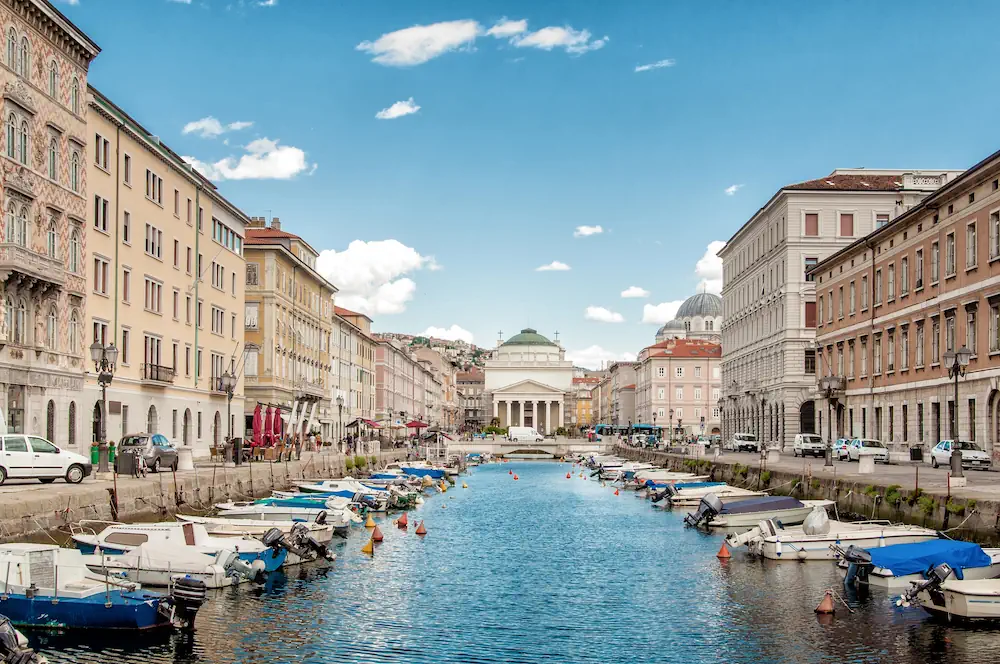
Trieste, Italy - where Nereo Rocco was borned and raised
The Beginnings
Nereo Rocco was born on May 20, 1912, in the Trieste suburb of Rozzol, a region currently part of Italy but at that time part of the Austro-Hungarian Empire. His grandfather was from Vienna, so his surname was originally Roch, although in 1925, as a consequence of new labor legislation, it had to be changed to Rocco. In 1918, US Triestina was founded, a club located near the area where Nereo lived, and from there his passion for football began, which grew in parallel with the club.His passion for the sport led him to organize football tournaments in the area, and thanks to a friend's insistence, he joined the Triestina youth team at the age of 15. Two years later, he made his Serie A debut, quickly earning a place in the first team and establishing himself as a player of acceptable quality for Italy's top level. He would spend seven seasons with the first team, playing 232 matches and scoring 66 goals. He spent the next eight years of his professional football career between Napoli and Padova. He even made his debut for the Italian national team at the height of his prowess with Triestina in 1934, although he only played that one match for the Azzurri.
The First Near Miracles as a Coach
Immediately after retiring as a player in 1945, he began coaching at a small club called Libertas. With this modest club, he faced Triestina and won, leading his boyhood club to decide to hire him as coach in 1947. Triestina was going through difficult years, indirectly affected by the country's sociopolitical situation at the time. Nereo had learned a tactic that came from Switzerland, specifically from a coach named Karl Rappan, who was dominating the Swiss league with Servette and Grashoppers. This tactic was known as Verrou (French for "lock" or "bolt") and had been implemented as a defensive strategy that balanced the forces between the big and small teams.The coach took several of the fundamentals of that tactic and added some of his own, such as the libero, a free player who stood behind the defensive line and came to the "rescue" of defenders. This would later be known as catenaccio, and Nereo Rocco would be considered the father of this strategy. While it wasn't entirely his own, he was the one who took it to the highest level and helped it become the flagship of Italian football for many years.
In his first season with Triestina, he revolutionized Serie A to such an extent that he finished in second place (the club's highest ever finish to date), tied with Milan and Juventus and only behind Grande Torino. He would finish in eighth place for the following two seasons, however, issues with the board led to his dismissal and a move to Treviso in Serie B, where he would remain for three seasons. In the first, he helped the club finish sixth in Serie B, its best ever finish.
After a one-season return to Triestina, he signed for Padova, then in Serie B, first avoiding relegation and then achieving promotion to Serie A in 1954-55. In the 1957-58 season, he achieved a historic third-place finish in Serie A. Padova had established itself as a team in the upper mid-table, and Nereo Rocco was a coach who achieved results with his defensive approach and was unashamed of partially neglecting the offensive phase.
It became something of a joke in Italian football that before the start of matches, coaches would politely say to their opponents, "May the best team win," and Rocco would always reply, "I hope not". Catenaccio had spread throughout Italy to the point that even the Azurri began using it after the Superga tragedy, where several members of the national team died. In fact, Nereo managed the 1960 Olympic national team, where they finished fourth in the competition.
Next Stop - AC Milan
His exploits could no longer go unnoticed by the Italian giants, and in 1961, it was AC Milan who decided to sign Nereo. His exploits could no longer go unnoticed by the Italian giants, and in 1961, AC Milan decided to sign Nereo. In his first season, he won the Scudetto and began to give a leading role to the young Gianni Rivera and with a great Jose Altafini. The following season, they were Italy's representatives in the European Cup, where they swept aside big clubs (back then) such as Ipswich Town, Galatasaray, and Dundee FC to face Eusebio's Benfica in the final.The final was played at Wembley and pitted two markedly contrasting styles against each other. Milan eventually won 2-1 with a brace from Altafini in a team that included, among others, Cesare Maldini and Giovanni Trapattoni (who learned a lot from Rocco). This was not only the first European Cup for the Rossoneri, but also the first for any Italian club. Although they had reached two finals before (Fiorentina in 1957 and Milan in 1958), they had not been crowned champions.
Curiously, this success led him to sign for Torino, who were looking to recover after the tragedy they had suffered in the late 1940s. Four seasons in Turin, which, although they were good, did not materialize in titles, led him to return to Milan and just like in his first spell, he won the Serie A again in his first season and the European Cup in his second, this time beating Johan Cruyff's Ajax in the final by 4-1 with a hat-trick from Pierino Prati.
He would ultimately complete a four-spell career at Milan (the last in a more advisory role), where he won, in addition to the aforementioned two European Cups and two Serie A titles, three Coppa Italia titles, two UEFA Cup Winners' Cups, and an Intercontinental Cup. It's worth noting that during his four spells at the club, he always won a title and retired as the coach with the most appearances in Milan's history.