
Luis Monti, the "Doble Ancho"
The history of football is so extensive and increasingly longer, and for this reason, some stories are less remembered because generations change, and the most recent feats or important events eclipse the previous ones. The current stars make those of yesteryear a little forgotten, the current records surpass the previous ones and that is why not all fans know about football history from several decades ago.The protagonist of these stories has one of the most impressive and particular records in world football that, almost a century later, has not been equaled and, given the direction that football is taking, it does not seem that anyone can do something similar. Nowadays, Luis Monti is not very well known and that is why his career deserves some recognition so that new generations know a little about this Argentine Italian.
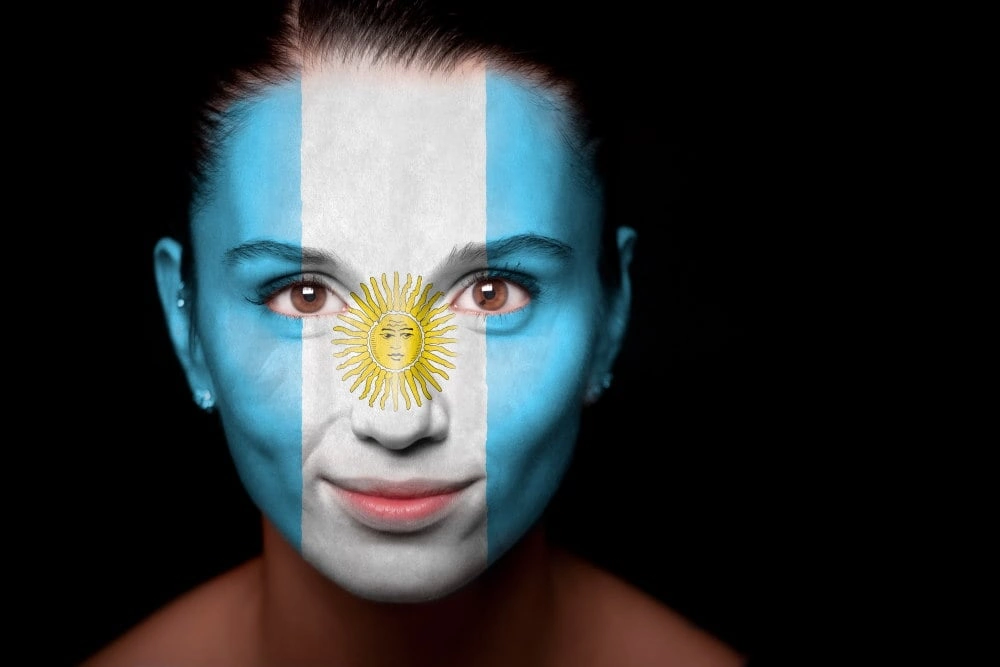
Argentina
Luis Monti was born on May 15, 1901, in Buenos Aires, Argentina, into a family of football players since his brother, uncle and cousins also worked professionally in this sport. His beginnings as a football player were in Huracán, back in 1921, where he managed to win the Argentine league, the first in the history of the Parque Patricios club. His participation was small but enough to attract the attention of several important clubs such as Boca Juniors.His signing for the Xeneize club was completed in 1922, although he never made his debut due to a serious injury that led Boca to let him go to San Lorenzo de Almagro. With Monti, Boedo's club became one of the strongest in the Argentine environment, winning 3 leagues in Monti's almost 8 years in San Lorenzo, the first 3 in the history of the institution. Between 1926 and 1927, San Lorenzo had 47 undefeated matches, which at that time was equivalent to 20 months without losing a game.
Monti was known as "Doble Ancho" (Double Width) due to the large pitch space he was able to cover, being a player of just 1.70 meters although with physical strength and energy that allowed him to be dominant in games. It is difficult to establish a comparison with a current player since at that time, the tactical scheme called Metodo existed and Monti played as a center half, a type of midfielder who had responsibilities of taking marks from opposing strikers like a center back but who was one of the creative midfielders when his team had the ball.
The Albiceleste
In 1924, he would make his official debut with the Argentina national team (often nicknamed Albiceleste), with which he would become a regular in the starting eleven. In 1927 he became champion of the South American Championship (currently known as Copa América) that was held in Peru and qualified for the 1928 Olympic Games, which would be held in Amsterdam. On Dutch soil, Argentina reached the final against Uruguay.At the time, Rio de la Plata football was the best in the world and the parity was notable in the final that ended 1-1, leading to a replay being played 3 days later. Roberto Figueroa put the Uruguayans ahead but Monti would score the temporary tie that would be broken again by Uruguay, through Hector Scarone, legend of South American football. The Uruguayans took the gold medal although the match made the rivalry between both teams become much harsher.
Two years later, the first FIFA World Cup would be played, with Uruguay as the host. As a curiosity, Monti would score the Albiceleste's first goal in the World Cup, against France. Argentina and Uruguay would win all their matches, most of them convincingly, until they reached the final, in a match that, in the run-up, was already going to be very difficult. In the Argentine concentration hotel, the Uruguayan fans were responsible for doing many things, most of them harmless, that interrupted their rivals' rest.
However, Monti received a letter in which they threatened to kill him and his family. At halftime of the final, Argentina, with Monti in the starting eleven, beat the hosts 2-1. Despite that, Uruguay would score 3 goals and leave the final score 4-2, to become the first world champion recognized by FIFA.

The Azzurra
Monti would later admit that he played that match with fear and that his mind was not focused on the final, which could have affected his team. The Argentine football media took it against him, so he began his intention to leave the country. Juventus would take advantage of the situation and Monti's Italian nationality to take him to Italy, where he would arrive with overweight issues and would have to train alone for several weeks until he reached optimal fitness.From then on, he would become a leading figure for the Turin club, helping them win four Serie A titles between 1932 and 1935. His performance caught the attention of the legendary Vittorio Pozzo who decided to call him up for Azzurra, the Italy national team, in 1932 and later call him up for the 1934 FIFA World Cup. Mussolini had started a program of nationalization of foreigners of Italian descent who were standing out in Serie A to reinforce the Azurra since the second edition of the tournament was being played in the country of the boot.
Italy would reach the final against Czechoslovakia and before the match, an emissary from Mussolini had approached the Italian team to tell them:
"Gentlemen, if the Czechoslovaks are correct, we will be correct. But if they want to beat us by being arrogant, the Italian must strike and the opponent must fall. Good luck for tomorrow, and don't forget my promise."
That "promise" that the emissary mentioned, which was really a threat, was "victory or death." Once again, Monti arrived at a world final under threat. Fortunately, this would end with victory in his favor.
"In 1930, in Uruguay, they wanted to kill me if I won, and in Italy, four years later, if I lost," Monti would declare some years later.
Legacy
Giglio Panza, an Italian journalist who became director of Tuttosport, one of the most important media outlets in Italy, defined Monti like this:"Argentina has sent us great footballers, but Luis Monti was different from all of them. He was many players in one. Several positions in the same position. Several hearts in a single body. A great footballer and a great man of honor."
This is more impressive when Panza's great love for Torino, Juventus' great rival, is highlighted.
Monti's story is so particular and unique that his passport is in the FIFA museum as an important object of World Cup history.