
Looking back at Mesut Özil's legacy with Arsenal
Mesut Özil was always been regarded as a phenomenal talent by most football fans and there is a good reason for that as very few players had his ability to make assists and that degree of exquisite technique. He was a technician's technician and a magical one at that, so it made a lot of sense that Arsenal fans were eager to see him at the Emirates Stadium when he was signed in the summer of 2013.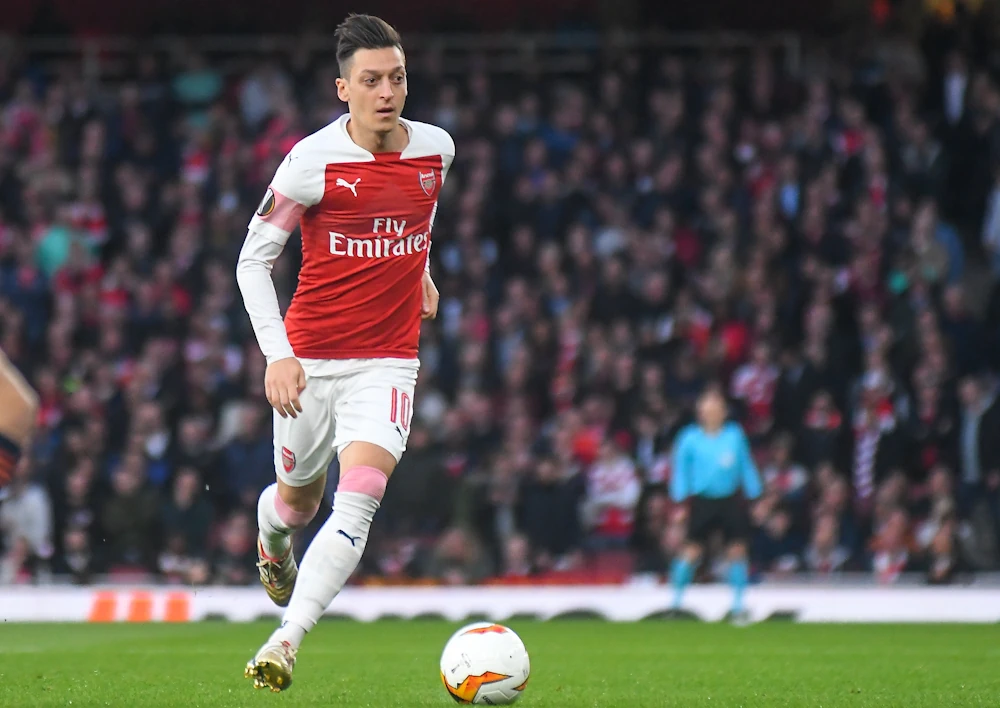
So, what went wrong for Mesut Özil at Arsenal? Why he was exiled and removed from the club at the time?
The context of his arrival
Arsenal self-funded the construction of their new stadium, the Emirates, and moved there in the summer of 2006, although it came with the cost of having major restrictions when it came to spending. That is one of the several reasons why the Gunners saw a considerable decline in this era, going from consistent title challengers to simply focusing on qualifying for the UEFA Champions League on a regular basis.While they did manage to qualify for Europe's top competition every season during this era, some of their best players were left to challenge for honors, which is something the club hadn't achieved since the 2005 FA Cup trophy. Footballers such as Cesc Fabregas and Robin van Persie left for FC Barcelona and Manchester United, respectively, as two major examples of top players joining other sides to win trophies, although that became a running issue at the Emirates.
That is when the Arsenal board headed to Madrid in the summer of 2013 to sign Real Madrid's Argentinian winger Ángel Di Maria, although they found out that Mesut Özil was available. Arsenal manager Arsene Wenger was a fan of the German midfielder and Özil was informed by the then-new Real Madrid manager that he wasn't going to have a guaranteed starting role anymore.
By the end of the 2013 transfer window, in the final minutes, Arsenal secured Özil's signing by paying Madrid a total of 50 million euros and giving him a five-year contract. That was the beginning of a new era for the Gunners.
The mercurial peak
Özil made his debut against Sunderland a few days later and only took him eleven minutes to make his first assist, which was to Olivier Giroud. At the time, that was very expected of him since Özil spent three years with Madrid in La Liga as the competition's top assist-maker and was heralded as a world-class player.The German became the club's talisman, a symbol of Arsenal's desire to compete again and make the leap to league winners once again. The first half of the season was very good for the Gunners and even had them on top of the Premier League for a while, with the combination of Özil and Welsh midfielder Aaron Ramsey gaining cult status in recent years.
While they didn't win the league, they did win the 2014 FC Cup, ending nine years of trophy droughts and also proving that Özil was slowly contributing to the side. The addition of Chilean forward Alexis Sanchez the following summer, coming from FC Barcelona, was another major statement and the Gunners once again won the FA Cup in 2015.
The 2015-16 season was arguably Özil's peak at Arsenal and his goal against Ludogorets is widely regarded as his finest with this team and one of the best in the club's history. However, while the club finished second and there was room for excitement, this is when things began to take a toll on the player and the club as a whole.
The decline
While Özil continued to give assists in his first seasons at Arsenal like he did at Real Madrid and the rest of his career, there was also the criticism of his mentality and athletic qualities. The latter was mostly a matter of off-the-ball intensity while the former was an issue that plagued his entire career, with critics often mentioning that Özil never turned up when it mattered.As Arsenal failed to qualify for the UEFA Champions League in the 2016-17 season (although they did win another FA Cup), Özil was beginning to be criticized. And once Arsene Wenger, a staunch defender of the player, retired in 2018, manager Unai Emery arrived and there was a feeling of trying to revamp the squad.
Özil was originally seen as a symbol of Arsenal's return to the top and a desire to challenge but his latter years were a steady decline. Emery didn't fancy him all that much and slowly eased him out, which was further developed by the next manager, Mikel Arteta.
Some people have claimed that Özil, a very vocal individual on social media, was pushed aside from the Arsenal squad because of his political posts. However, he was actually separated from the club because he didn't agree to take a pay cut during the COVID-19 pandemic, which is something that Arteta didn't like.
Özil eventually left for Fenerbahce in 2021 but was mostly seen as a pariah at Arsenal at the time. His stint there went from great to bad as underperforming in big games, a steady decline, and a change in administration affected his time as a Gunner.