
Juan Carlos Lorenzo and How He Became a Boca Juniors Legend
Just as the tide erases the footprints of the sand, time makes certain people in football forget. Juan Carlos Lorenzo, who is still present among Boca Juniors' most veteran fans, has been somewhat forgotten, but the Argentine manager was ahead of his time and triumphed both at home and in Europe.
Boca Juniors flag - the club where Juan Carlos "Toto" Lorenzo is a legend today
Early Life and First Steps in Football
Juan Carlos Lorenzo was born in Buenos Aires, Argentina, on October 27, 1922. The son of a housewife, his mother Rosa, who would give him his nickname "Toto," which stayed with him throughout his life and whose origin he never really knew."I never knew how it came about, but it was my mother's idea. She always called me Toto, a nickname that wasn't common at the time. Who knows why she called me that?"
His father owned a shoe store and was a fervent football fan. First, he was a big fan of River Plate (that's why he took little Juan Carlos to the El Millonario stadium), but then he became a fan of San Lorenzo thanks to the Spanish players Isidro Langara and Angel Zubieta.
As a player, he had a trial with River Plate, but it didn't go well, and in 1938, at the age of 16, he joined Nueva Chicago's reserve team. Lorenzo had played football on the streets of Buenos Aires, but never for a football club. He performed as a right-sided attacker, more capable of creating plays and assisting than scoring goals, and his profile went somewhat unnoticed. A year later, without having made his first-team debut, he left Nueva Chicago for Chacarita Juniors, where he also started out playing in the reserve team but training with the first team. In 1940, near the end of the tournament, the Argentine Football Federation (AFA) sanctioned Chacarita over an attempted bribery case involving Newell's goalkeeper Aldo Ramaciotti, a punishment that effectively cost the club six matches and left it in a desperate relegation situation.
This sanction forced El Funebrero to resume his activity in the tournament with six matches remaining and in a very difficult situation, facing relegation. In this situation, Juan Carlos Lorenzo made his first-team debut in the third of the remaining six matches and continued playing until the end of the tournament, scoring two goals. Despite his strong showing in the First Division, he was unable to prevent Chacarita's relegation. In 1941, he won the Primera División B (the second tier of Argentine football), his first title as a football player. He established himself as a regular at Chacarita, and in 1945, he was part of a deal with Boca Juniors, where he and Enrique Martegani went to Xeneize (nickname for Boca Juniors) while Carniglia and Valsecchi went the other way. This would be his first stint at Boca Juniors, but by no means his last.
First Boca Spell and the Move to Europe
By a whim of fate, his debut would be against Chacarita, in a 5-3 Boca victory where Lorenzo scored the third goal. Xeneize's attack was quite strong at the time, and Toto couldn't get a starting place, so in 1948 he signed with Quilmes, who were in the Primera División B. A year later, he received an offer from the Italian club Sampdoria, who wanted him in the assistant role that suited him so well. Already at a mature age (almost 27 years old), married with two children, he decided to accept and go to Italy. The change was noticeable since Italian football at that time was very much about long balls, and not the creative football that was played in Argentina.The European Years That Shaped Lorenzo the Coach
In 1952, he joined Nancy in France, where he would share the attack with Roger Piantoni, who, along with Raymond Kopa and Just Fontaine, formed the French attacking trident at the 1958 World Cup. He would also meet Jacques Favret, a goalkeeper and coach who had an almost obsessive approach to football and was attentive to every possible detail. It was Favret who would convince Lorenzo to train as a coach, something that the Argentine didn't seem to be interested in at first, somewhat ironic considering what his coaching career would be like.The Frenchman's insistence was such that Lorenzo told him he didn't want to take the course in France but in England. A few days later, Favret returned with the news that the board had approved a scholarship for him to study to become a coach on British soil. The course was an intensive course lasting approximately one month, where he learned a lot about the English way of playing football.
"That course was decisive in my coaching career. As a player, I hadn't been a Moreno or a Pedernera. I needed knowledge to excel as a coach, and for that, I had to train. I will be eternally grateful for the initiative and drive of my friend Jacques Favret."
After two years, he would go to Spain to play for Atlético Madrid, Rayo Vallecano, before finishing at RC Mallorca, where he would close out his playing career and begin his coaching career at the same time.
His arrival in Palma de Mallorca didn't allow him to make the direct transition to manager as he had originally hoped, as the club was in the third tier of Spanish football, in a difficult situation, with few players, so Toto couldn't hang up his boots just yet. He turned to some friends he had made during his career, especially former teammates at Atlético Madrid, who would lend a hand at Mallorca. The result couldn't have been better, as in two seasons they achieved two promotions and reached the First Division. However, during that process, in 1959, he decided to leave football as a player to concentrate on his career as a manager, which was already promising at that time.
Already in the Balearic Islands, he had begun to employ strategies that would later become much more common in football, such as raising the grass higher or overwetting the pitch, which would become part of his trademark coaching style: always gaining an advantage over his opponent.
In 1961, suffering from homesickness, he decided to return to Argentina to coach San Lorenzo, the team his father supported and with which he achieved a runner-up finish, finishing behind a very good Racing Club. Just a year later, he would get his first opportunity to coach the Argentine national team on the biggest stage, the World Cup. Lorenzo's ideas, some of which had already been applied in Europe by Helenio Herrera, caught the attention of the Argentine football community and that facilitated his arrival at the national team.

Argentina and the World Cup Experience
In the World Cup in Chile 1962, things did not go well as the initial victory in the group stage against Bulgaria was countered by the defeat against England and then a draw against Hungary that left Argentina tied on points with the English but the latter had a better goal difference and qualified as second in the group while the South Americans finished third and out of the competition."It was a mistake to have accepted. The Argentine player of those days was technically gifted, but not physically. And the most difficult thing was that he didn't have the desire to get in shape," Lorenzo would declare many years later.
His time with the national team was quite short, as in 1962, shortly after the World Cup, he returned to Europe to sign with Lazio, who were in Serie B. In his first season, he achieved promotion to Serie A by finishing third (the last promotion spot in the category at that time).
He would spend a year with the Lazio team in the top flight, finishing in a good ninth place although earning the hatred of the fans as he would sign with their eternal rival in the summer of 1964. Roma seemed like a good fit for Lorenzo, although the club's debts, accumulated by the management of its president, Francesco Marini-Dettina, had the team in a difficult situation. Despite this, they managed to win the Coppa Italia that year. At the end of the season, both Lorenzo and the president would leave the club. Toto seemed destined for Spain, but Argentina was once again in his way. In 1966, he again led his country's national team for the World Cup in England. At the time, the national team's situation was such that players barely wanted to be called up and managers didn't want to take on the role of coach because it would be detrimental to their careers.
Chaos Before England 1966
The outlook didn't look good, as there was little time to work before the World Cup, and what was organized was a European tour where they slept in substandard hotels and faced unreliable opponents. In addition, there was an incident in which Lorenzo attempted to attack a German journalist, accusing him of being a spy. The relationship between the manager and the players was not good, and Toto decided to hire a spy to follow them, something the players found out about, became upset, and decided to return to Argentina. In this dire situation, the Argentine Federation sent Valentin Suárez, a manager who had an excellent relationship with the national team's key players and who prevented the exodus. Suárez even intended to be the one to name the starting lineup for the matches, and Lorenzo, to prevent this, announced the lineup in a press conference days before each match.There was a war between Toto and basically everyone else, with a World Cup looming. As if that weren't enough, Argentina shared a group with Switzerland, West Germany, and Spain, and to the surprise of many, the Albiceleste managed to qualify for the next phase after victories against the Swiss and Spanish and a goalless draw against the Germans. Unfortunately for Argentina, they were faced in the quarterfinals by England, the home team and eventual champions. They defeated Lorenzo's team 1-0 with a goal from Geoff Hurst, the same player who would become the first player to score a hat trick in a World Cup final in that same edition.
Return to Club Football and the San Lorenzo Peak
The end of that World Cup would also mark the end of Toto's time with the national team, and after a brief stint with River Plate, Lorenzo would return to Rome, this time to manage Lazio. This return to the sky-blue team was accompanied by another promotion from Serie B to Serie A, this time as champions of the division. In 1972, still in charge of Lazio, he returned to Argentina for his daughter's wedding and there received an offer to return to San Lorenzo, which he accepted. There began what would be the best period of Lorenzo's career. At the Blaugrana club, he implemented double-shift training, opted for players of lesser standing who fit what he was looking for, and made positional changes to some players.That team would win both the Metropolitano and Nacional in 1972, with the Nacional title coming unbeaten. They were clearly the best club in Argentina in 1972, although it received criticism for its defensive style, to which Lorenzo said that "my first objective is to prevent goals and then attack, even though the press describes me as defensive. Everywhere I applied cunning and sought to take advantage, but always within a limit. Some words that Angel Labruna repeated stayed with me: you can't be a watchman and a thief at the same time". In 1974, he would join Atlético Madrid and lead the team to a European Cup final against Bayern Munich. That final pitted a German team featuring Sepp Maier, Franz Beckenbauer, and Gerd Müller, and coached by Udo Lattek, against a Spanish team featuring names like Luis Aragones and Javier Irureta.
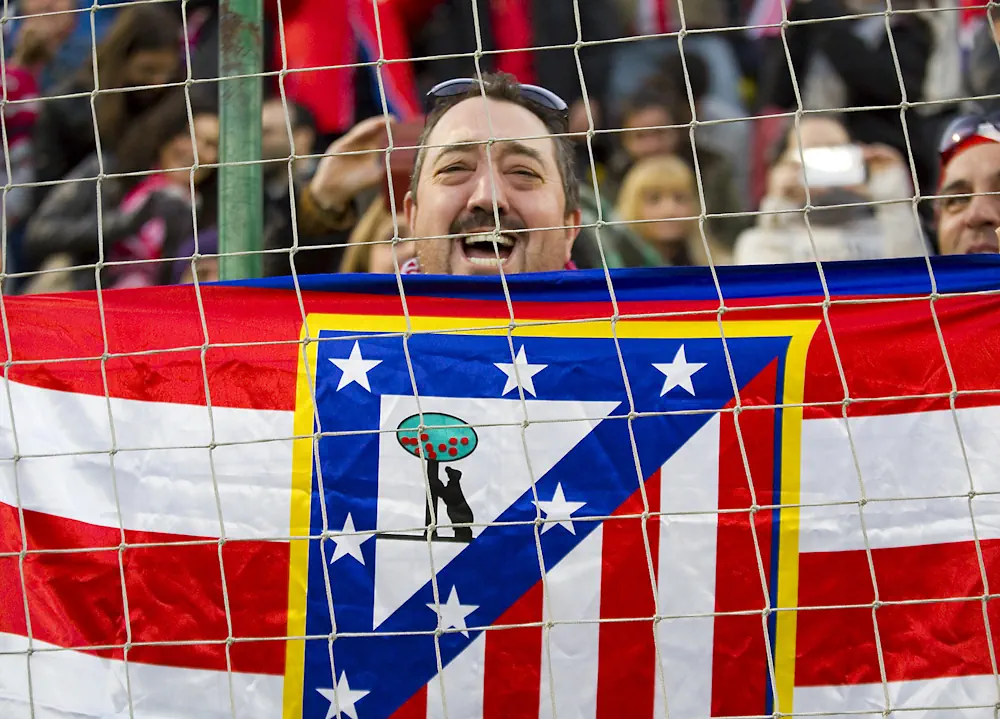
Atlético Madrid fan with a flag
European Cup Heartbreak with Atlético Madrid
The match was played at the Heysel Stadium in Brussels and ended 90 minutes 0-0. In the 114th minute, Aragones scored what appeared to be the winning goal; however, in the 120th minute, Bayern equalized with a goal from Schwarzenbeck. This prompted a replay where doubles from Müller and Hoeness ended the European dream of Lorenzo and his team. He would soon return to his country to manage Unión de Santa Fe, a small provincial team that had just been promoted to the first division, although he would soon sign with Boca Juniors.Boca Juniors and the Making of a Legend
His arrival at Boca Juniors came in 1976, replacing Rogelio Domínguez, who had established an attractive, attacking approach to Boca Juniors, but it wasn't reflected in trophies. Alberto Armando, the club's president, gave Toto a certain amount of authority upon his arrival, saying, "my idea is to build a cohesive team. Equal and winner. Where the whole team plays for the same purpose. In the Boca Juniors I have in mind, anyone who wants gadgets should go to the toy store".Lorenzo made many player changes, instilling a lot of discipline and a firm hand, which helped filter out some players who didn't meet Toto's disciplinary requirements. That Boca would become the "great Boca" before the team coached by Bianchi in the late 20th and early 21st centuries. Lorenzo would win two local championships in 1976 and the club's first two Copa Libertadores and first Intercontinental Cup. His spell at Boca, from 1976 to 1979, was enough for Lorenzo to become a Boca legend who everyone remembers to this day.
Final Years and Legacy
His departure from Boca Juniors in 1979 also marked the end of Lorenzo's best years, as his career continued with other Argentine clubs such as Racing Club, Argentinos Juniors, San Lorenzo (once again), Vélez, and Atlanta, with a brief stint at Atlante in Mexico that didn't go well due to problems within the dressing room. He would finally close out his career with three clubs that left their mark on him, with returns to Lazio, San Lorenzo, and Boca Juniors.On November 14, 2001, at the age of 79, Juan Carlos Lorenzo died in Buenos Aires after a long illness. His body was cremated and his ashes were later scattered at La Bombonera (Boca's home arena with the official name Alberto José Armando Stadium).