
How Marcelo Gallardo Transformed River Plate
Great teams are often measured by the trophies they add to their collections, and in this sense, Gallardo's River Plate achieved something that is usually very difficult in South American football: establishing a degree of dominance at both domestic and international level. The dynamic nature of football in South America means that clubs cannot retain their best players or managers for very long, but River Plate managed to overcome this challenge, creating a cycle of success with few parallels on the continent.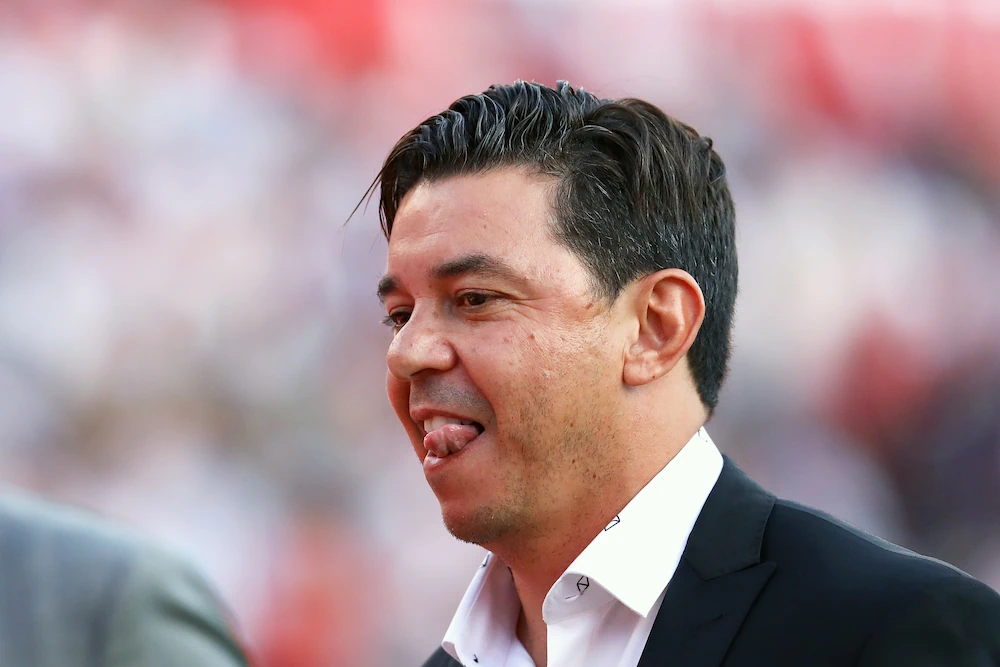
©
Marcelo Gallardo
From Domestic Champions to Historic Relegation
In the first decade of the 21st century, River Plate went through a series of very difficult seasons because of numerous sporting, financial and institutional problems. On the field, they won the 2008 Clausura championship but finished last in the 2008 Apertura. Relegation in Argentina is based on the average points earned over several tournaments, so finishing last in a single tournament is not enough. Nevertheless, the result highlighted the club's inconsistency, which was simply a reflection of everything happening at River.In December 2009, presidential elections were held at the club, and Daniel Passarella, already a legend of River Plate and Argentine football from his time as a player and manager, emerged victorious. "El Kaiser" arrived to replace José María Aguilar, who had held the position since 2001. Although Aguilar's first years had been successful domestically, the club had gradually fallen into a serious sporting and financial crisis under his leadership.
River Plate brought back experienced and high-profile former players such as Matías Almeyda, Ariel Ortega and Marcelo Gallardo, and appointed coaches such as Astrada and Cappa, but the results were not forthcoming. River gradually declined until they found themselves fighting to avoid relegation. This meant they needed to produce outstanding seasons to improve their average points per game from the previous years and escape the threat of relegation.
J. J. López, who had played for the club for a decade, arrived as coach and managed to accumulate many points in his first few matches. However, this was not enough to prevent River from entering the relegation play-offs in 2011. Their opponents were Belgrano de Córdoba, and the tie was played over two legs. The first leg ended 2-0 in favour of the Córdoba club, and in the second leg, River could only manage a 1-1 draw, resulting in a 3-1 aggregate defeat and the first relegation in the club's history.
River's Return and Institutional Rebuilding
Their spell in the second tier lasted only a year, thanks in part to Matías Almeyda, who retired as a player following relegation and took over as manager, and to players such as Fernando Cavenaghi and Alejandro Dominguez, who returned to the club to help it regain its place in the top flight.River Plate's transfer activity in 2012 proved highly successful, perhaps not immediately, but certainly for the club's future. Players such as Marcelo Barovero, Gabriel Mercado, Ariel Rojas and Rodrigo Mora arrived at River, although the team ultimately finished eighth in the league. This led Passarella to dismiss Almeyda and fulfil the fans' wishes by bringing in Ramón Díaz, who at that time was the most successful manager in the club's history.
Presidential elections were held at the club again in 2013, and this time Rodolfo D'Onofrio emerged victorious. He had lost to Passarella by just six votes in 2009. D'Onofrio brought in Jorge Brito and Matías Patanian as his vice-presidents, while also bringing club legend Enzo Francescoli into his management team. In 2014, Díaz led the club to another Argentine championship but surprisingly resigned, stating that he had already given everything he could to the club.
Gallardo Arrives and Restores River's Continental Status
Marcelo Gallardo retired as a player in 2011 with Nacional de Montevideo and immediately took over as manager of the Uruguayan club, winning the league title in both his final year as a player and his first as a manager. That was his only season in charge of Nacional, and he then took a break until River Plate called him in 2014 to replace Ramón Díaz.Beyond his successful year at Nacional, the fact that he was an idol at the Argentine club clearly had a major influence on the decision to appoint him. River Plate had a less active transfer window than usual, with Leonardo Pisculichi, who arrived as a free agent from the recently relegated Argentinos Juniors, proving to be the most significant new signing. Goalkeeper Julio Chiarini also joined, while Carlos Sánchez and Rodrigo Mora returned from loan spells. The most notable departures included Manuel Lanzini and David Trezeguet.
A key feature of that squad was its large core of homegrown players, partly because of River's financial difficulties in the preceding years, although relying on academy players was also common among Argentine clubs. Among the players who came through the academy were names such as Augusto Batalla, Germán Pezzella, Emanuel Mammana, Matías Kranevitter, Guido Rodríguez, Giovanni Simeone and Lucas Boye.
In less than six months, the club reached the Copa Sudamericana final, having defeated their arch-rivals Boca Juniors in the semi-finals. Their opponents in the final were Colombian Atlético Nacional of Medellín, managed by Juan Carlos Osorio and featuring players such as Juan Pablo Ángel and Franco Armani.
River won 3-1 on aggregate, but beyond the trophy itself, the victory represented a significant turning point for the club. The new era under Gallardo began with an international trophy, 17 years after the club's previous international title, and River had also eliminated Boca Juniors along the way.
The following year, the team won the Copa Libertadores, defeating Tigres of Mexico, one of the continent's most financially powerful clubs, 3-0 on aggregate. Interestingly, they once again eliminated Boca Juniors, this time in the round of 16. In addition to the Copa Libertadores, the club won the Recopa Sudamericana and the now-defunct Suruga Bank Championship.
In 2016 and 2017, River won the Recopa Sudamericana once and the Copa Argentina in consecutive seasons. They subsequently won the 2017 Supercopa Argentina, which was played in March 2018. By this point, River Plate had established themselves as a winning team befitting their history. They had also consolidated a management model that allowed the club to grow significantly, essentially functioning like a snowball rolling down a mountain.
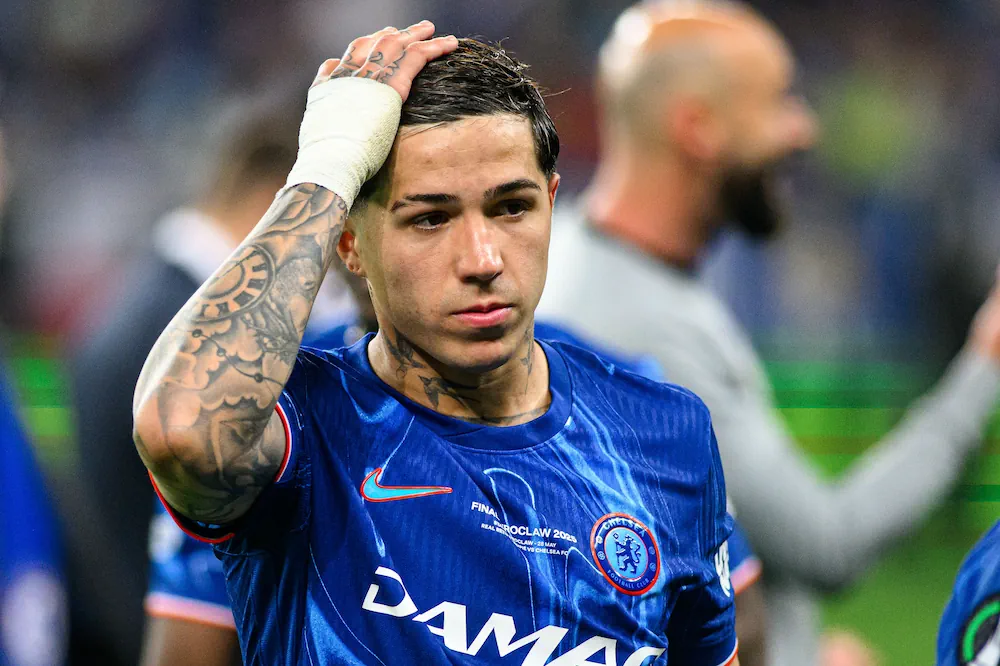
Enzo Fernández - here playing for Chelsea
A Sustainable Model for Success
Some players developed at the club were loaned out to gain experience before returning ready to excel for a team that was, by then, one of the most successful on the continent. Enzo Fernández later became one of the clearest examples of this model.The club used its growing financial strength to recruit lower-profile players who could offer strong performances, such as Ignacio Fernández, who arrived from Gimnasia y Esgrima La Plata. River also became capable of attracting established names, including returning club icons such as Pablo Aimar and Andrés D'Alessandro. This process was repeated over several seasons. The combination of young academy players, astute signings and established stars gave River a level of quality and status that was difficult to match on the continent.
The Historic Libertadores Final Against Boca
In 2018, River reached the Copa Libertadores final again, but this time it was a far more unusual final than any of the others, as their opponents were Boca Juniors, marking the first Copa Libertadores final between Argentina's two biggest rivals. The first leg was played at La Bombonera and ended 2-2. Before the second leg, disturbances and violence led to the match being suspended. It was initially rescheduled for the following day, but this ultimately proved impossible.A couple of days later, CONMEBOL decided to move the second leg outside Argentina to avoid further violence. As a result, the match was played at the Santiago Bernabéu in Madrid, an unprecedented decision in South American football.
Finally, on 9 December 2018, two weeks later than originally planned, the second leg was played. Benedetto put Boca ahead, but Pratto equalised. With the score at 1-1, and 3-3 on aggregate, the match went to extra time, as if it had not already been tense enough.
In the 109th minute, Colombian Juan Fernando Quintero, who had been a substitute in the first leg, scored a spectacular goal from outside the penalty area, giving River Plate their first lead of the entire final. In the 122nd minute, with Boca committed to attack, Gonzalo Martínez scored the final goal to make it 3-1.
That final propelled the team, and Gallardo in particular, to a new level of idol status within the club, cementing his untouchable position within the club. It also strengthened the model River had been using in recent years.
Gallardo went on to win the 2019 Recopa Sudamericana, the 2019 Copa Argentina, the 2019 Supercopa Argentina, the 2021 Primera División and the 2021 Trofeo de Campeones. In 2022, he decided to step down, seeking a break and bringing to a close a successful chapter that had made him the most successful manager in the club's history.