
From turbulence to triumph - Italy, the World Cup 2006 and Calciopoli
In the 1990s and early 2000s, Italian football was one of the two best in Europe and its clubs were protagonists in international tournaments. Despite being world champions in 2006, the match-fixing case called Calciopoli significantly affected (along with other factors) the Italian clubs, which, with a few exceptions, have not managed to regain the level they once had. Today we revisit the history of that bittersweet moment in the history of football in the country of the boot.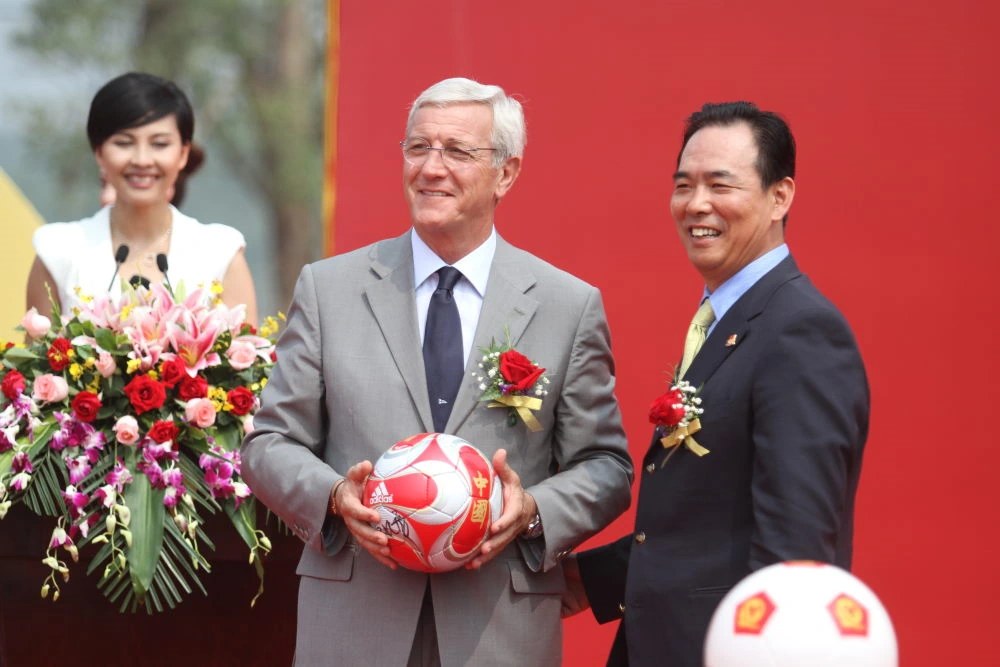
Marcelo Lippi
The beginning
On 14 May 2006, Fabio Capello's Juventus visited the Stadio San Nicola to face Reggina, where they won 2-0 with goals from David Trezeguet and Alessandro Del Piero and were crowned Serie A champions again (they had also won the 2004-05 season) or at least, that's what they thought. After the celebrations, much of the Vecchia Signora squad left with their respective national teams to prepare for the World Cup in Germany. From the Juve squad, Gianluigi Buffon, Fabio Cannavaro, Alessandro Del Piero, Mauro Camoranesi and Gianluca Zambrotta went with Italy.The team led by Marcelo Lippi decided to spend a training camp in Switzerland, where they would spend the days leading up to the top competition in the world of football, where they played a couple of preparatory matches that ended in 1-1 draws, first against Switzerland in Geneva and then against Ukraine in Lausanne. The Azzurri did not inspire optimism despite having a squad full of talented players, skill and experience at the highest level.
Just days before Italy's World Cup debut, conversations between Paolo Bergamo, who is in charge of appointing the referees for Serie A, and several directors of Italian first-tier clubs were leaked, including Gianluigi Paretto, the head of referees at the time. Although at the time of the leaks there was no certainty as to who the clubs involved were, it was presumed that Juventus and Milan were involved. This, logically, was a hard blow for the national team, whose several players could be affected by what happened in these investigations, since their clubs could receive heavy sanctions. It was in this context of uncertainty that Italy arrived at the World Cup, an adversity that has historically strengthened the Azzurri.
The World Cup 2006
Italy debuted on June 12 against Ghana with a 2-0 victory that helped bring some peace of mind to the national team, which, in its second match, tied 1-1 with the United States and beat the Czech Republic with another 2-0, allowing them to qualify first in their group. In parallel with the World Cup, more and more details of the controversial Calciopoli affair were emerging in Italy. The investigation had access to phone calls in which Luciano Moggi and Antonio Giraudo, both Juventus directors, spoke with Paretto and Bergamo to appoint Juventus-friendly referees for the decisive matches of the Vecchia Signora.Meanwhile, it was discovered that directors of Milan, Fiorentina and Lazio also had similar approaches with the refereeing authorities. Additionally, it was rumoured that Moggi had such influence that he allegedly pressured Lippi to call up more Juventus players. In addition, there were rumours that Moggi had such influence that he had allegedly pressured Lippi to call up more Juventus players. Meanwhile, the World Cup was still being played in Germany and Italy had to face Australia in the round of 16, amidst all the commotion caused by the news coming from the country of the boot.
A penalty from Francesco Totti in the fifth minute of added time in the second half was the difference between Italy and Australia, in a match that was more than complicated for Lippi's team. In the quarterfinals, Ukraine awaited them, but they did not really pose a major obstacle for the Azzurri as they were comfortably beaten 3-0 with a double from Luca Toni, silencing a little the criticism left by the match against the Australians.
On 4 July, Italy faced the host Germany in the semi-finals, but on the same day, the investigation was concluded and with the evidence gathered by judges and prosecutors, the courts of the Italian Football Federation gave their verdict. Juventus was stripped of its last two scudettos (2004-05 and 2005-06) and relegated to Serie B, Fiorentina was also relegated to Serie B while Lazio and Milan remained in Serie A but with points deductions. All four teams received additional fines, and Juventus and Fiorentina would have points deductions in Serie B. It is worth mentioning that 13 of the 23 players called up by Lippi played for one of those clubs.
With that news, the semi-final was played at Signal Iduna Park (previously called Westfalenstadion, the home arena of Borussia Dortmund), in a hugely even match and one of the best of that edition of the World Cup. The 90 minutes ended 0-0 and the tie continued in extra time until the 119th minute, when a corner in favour of Italy was taken by Del Piero, the rebound fell to Pirlo on the edge of the box and he passed it to Fabio Grosso, and the left back kicked it with first intention to beat Lehmann. A couple of minutes later, Del Piero would score completing a great Italian counterattack taking advantage of the fact that all of Germany had gone up to look for the equaliser.
©
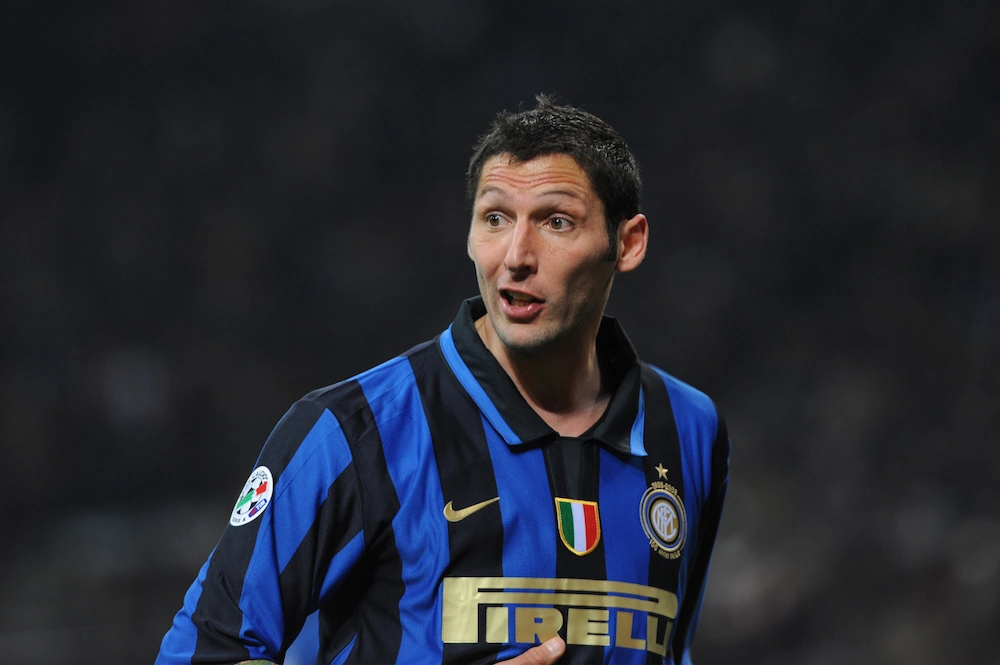
Marco Materazzi
The sanctions received by the clubs were later reduced, although Juve continued to play in Serie B and this meant that players such as Vieira, Ibrahimovic, Thuram and Cannavaro left the club, although others such as Trezeguet, Del Piero, Buffon and Nedved stayed to achieve promotion a year later.