
André Villas-Boas and the Porto Team That Had It All
André Villas-Boas was the most prominent young manager back in the early 2010s and a lot of people thought that he was bound to conquer the world of football. A former disciple of José Mourinho, having worked with him at Porto, Chelsea, and Inter, a lot of football fans had expectations regarding what he was meant to be. And everything started with his Porto side from the 2010/11 season.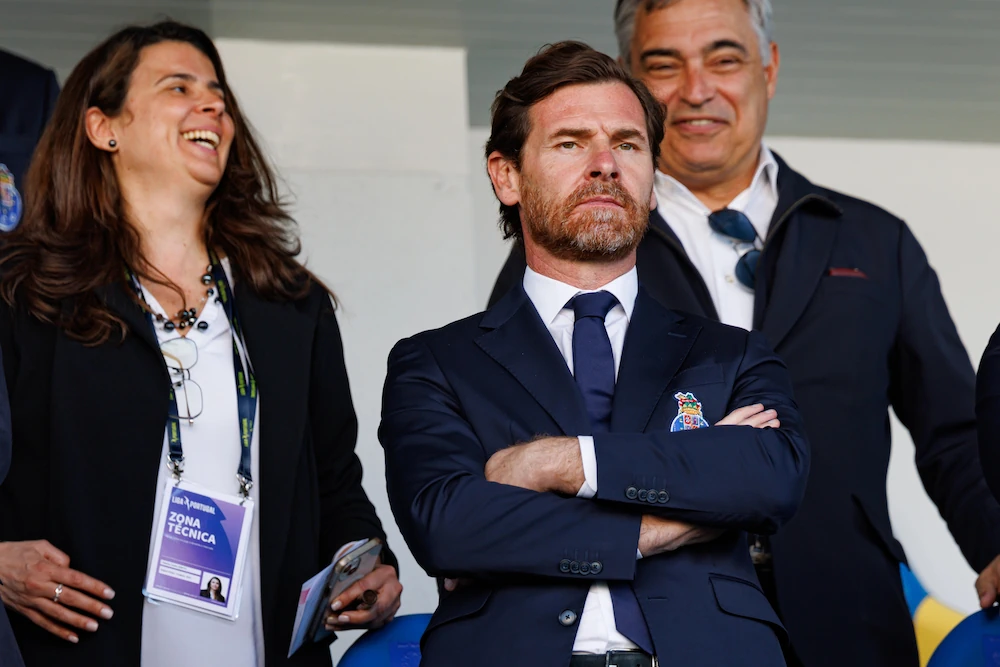
André Villas-Boas
The Making of André Villas-Boas
Villas-Boas' journey in football seemed almost like a movie at first. When he was 16 years old, he found out that he was living at the same apartment block as the Porto manager back in 1994, the great and late Sir Bobby Robson. As he attempted to share insights with the Englishman regarding tactics, the latter was impressed and decided to take him under his wing, helping him get his FA badges as a coach.From that point onward, André would begin his work in football, with Robson going as far as arranging a chance for him to join George Burley's Ipswich Town to gain experience.
"It was a long time ago," Burley said in 2011, as reported by The Guardian. "But I remember André as a really nice fella, who was very intelligent and wanted to learn. It's great to experience different cultures. I myself was brought up under Sir Bobby Robson and if he called, you helped him."
Working mainly analyzing rival teams, by the time he was 19 years old, Villas-Boas already had his qualifications to coach teams and, by the age of 21, became the technical director of the British Virgin Islands national team, even going as far as coaching one match for them, which was a big experience for him.
Soon after, he would become a part of José Mourinho's coaching staff at Porto and would follow the legendary manager to Chelsea and Inter. However, they would end up falling out during the 2008/09 season since Villas-Boas wanted to break out on his own. That he did with the Portuguese club Académica de Coimbra in the middle of the 2009/10 season, taking them from relegation danger to a respectable mid-table finish.
Now, it was the time for his greatest challenge until that point in his career, which was coaching Porto.
Porto and Massive Success
Villas-Boas' Porto stint couldn't have started any better as they defeated lifelong rivals Benfica 2-0 to win the Portuguese Supercup. However, that wouldn't even begin to compare to what would happen later during the season since Porto would go on to win the league undefeated, which was only the second time that happened in the Portuguese league.The team would win the league by 20 points and would only concede 13 goals across the entire league campaign, which was another massive achievement. Furthermore, this would be coupled with a Taça de Portugal victory (the Portuguese cup), with Porto defeating Vitoria Guimarães with a clear 6-2 score and future Real Madrid playmaker James Rodriguez scoring a hat-trick.
The biggest achievement of this squad, though, would be the UEFA Europa League victory since they defeated fellow Portuguese side Sporting Braga in the final 1-0, with Colombian striker Radamel Falcao scoring the winning goal. This meant that Porto won a treble and had one of the best seasons in the club's entire history and further cemented Villas-Boas as one to watch when it came to up-and-coming football coaches.
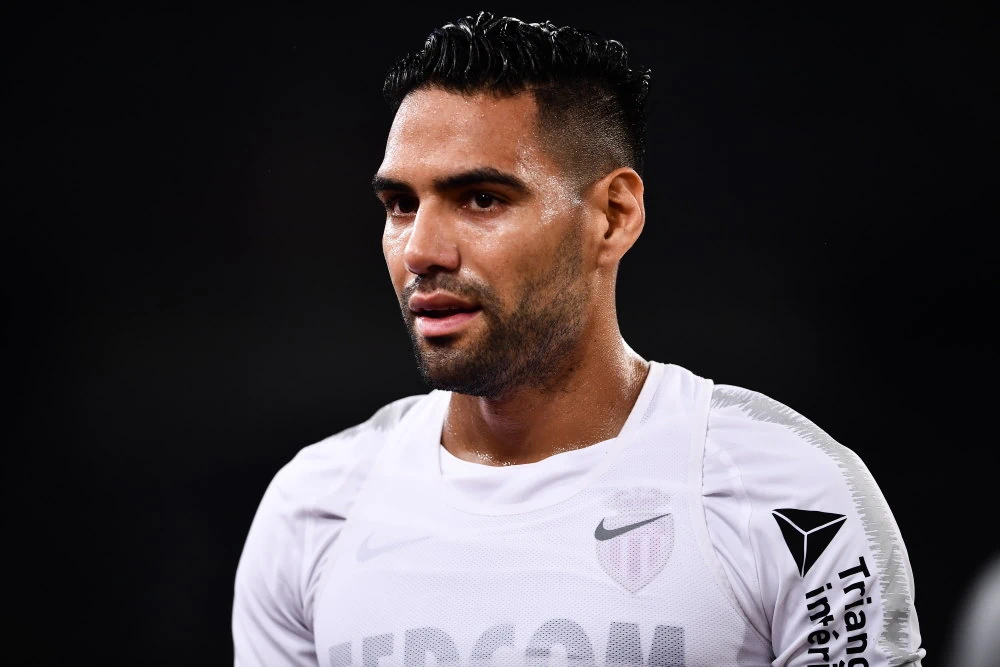
Radamel Falcao
"Scoring in a final is very special, and winning thanks to your own goal is even more special and satisfying," Falcao said in 2017 during an interview with the official UEFA website. "I'll always remember the goal in the Europa League final, as it gave us the victory and was my first European title."
Villas-Boas was the third youngest coach in history to secure the Primeira Liga title, following Mihály Siska in 1939 and Juca in 1962. Additionally, he became the youngest coach to win a European competition at just 33 years and 213 days old. Adding to the Mourinho comparisons, there was a growing expectation for him to take a bigger job, with rumors of AS Roma and Liverpool interested in his services.
Players such as the aforementioned James Rodriguez and Radamel Falcao would become stars during the manager's tenure and would go on to greater heights. Moreover, midfield duo João Moutinho and Fredy Guarin would be key to the team's performances, with the latter later earning a move to Inter Milan.
The Brazilian striker Hulk would also have one of the best seasons of his career, scoring 35 goals in 53 matches across all competitions, arguably delivering the finest performances of his entire stint in Europe.
©
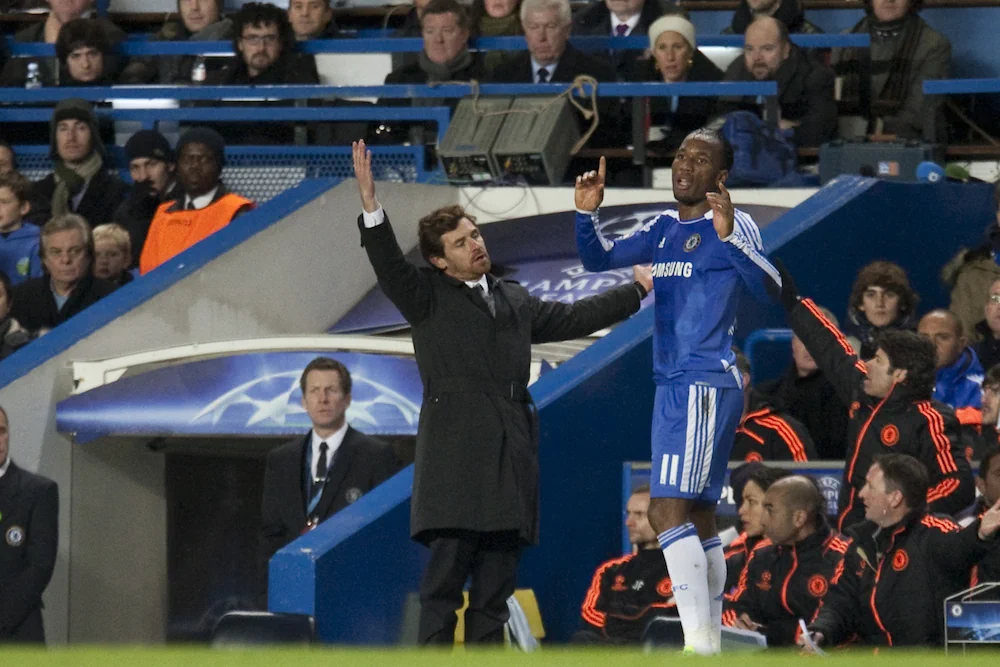
André Villas-Boas here at Chelsea with Didier Drogba during a match
Life After Porto
The reality is that Villas-Boas would never hit these heights ever again in his career. He signed for Chelsea the following summer, adding more to the Mourinho comparisons, but the results were very different. The new Portuguese manager attempted to bench the likes of Frank Lampard and John Terry, pillars of the club for almost a decade at the time, but neither the results nor the playing style were good enough, eventually getting him sacked before the end of the season."When AVB came in, we went to Hong Kong I think when he was first manager," John Terry said in 2024, as reported by GOAL. "We got on the plane and I'm sitting on economy on a 13-hour flight. And we've got Josh McEachran, Nathaniel Chalobah, a couple of other young players, all in first class. And this was part of AVB going: 'No player is bigger than me, everyone's the same.' It turns out Lamps (Frank Lampard) is flying out first class and I'm flying back first class, so if you fly out at home in first, you come back in economy. But basically it wasn't good enough, so I'm going: 'No no, we're not going anywhere until these young players go back in economy, and the first team players that have built this club to where we are today go back in first'."
If anything, this little anecdote proves that perhaps Villas-Boas was never going to be the genius manager a lot of people hyped him to be.