
Why Roberto Mancini's Time at Inter Still Matters Today
Roberto Mancini is an interesting figure when it comes to Inter Milan. He is someone who has been an important contributor to the club's success in the 2000s, thus helping establish the club back at the top after years of underperforming. However, there has always been a feeling that he did most of the leg work for other managers to get the biggest accolades. His time at Manchester City was similar.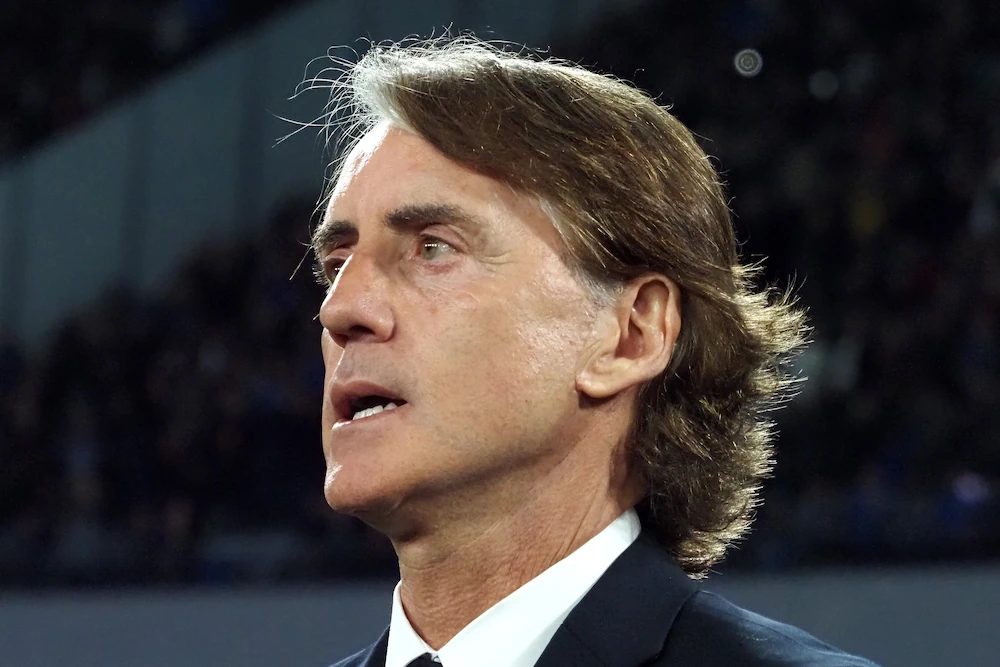
First Era
Mancini started his career as a manager dealing with a lot of financial problems that his club's had. The first case was Fiorentina in 2001 since the club was financially hamstrung and had to sell key players like Rui Costa and Francesco Toldo. Mancini himself even had to play a few times to fill in the numbers. However, he did win a Coppa Italia despite all this, although it came at the expense of being in a relegation place during the 2001/02, with the club getting relegated after his sacking.He was hired by his former club, Lazio, and overall did a good, qualifying for European competitions while dealing with financial trouble. As he signed for Inter Milan in 2004, the Italian giants had been investing heavily for years and struggling to perform, although Mancini won the 2005 Coppa Italia, the third in his career after winning it with Fiorentina and Lazio, and would add another one of those in 2006.
After two of his players, Javier Zanetti and Cristiano Zanetti (not related to each other), were physically assaulted by fans on April 10, 2006, Mancini was very vocal about his desire to go abroad after his time with Inter:
"This matter has speeded up my plans to go abroad -- when I finish with Inter, I will leave Italy, that's a certainty. Playing and enjoying yourself, which is what the game is all about, is no longer possible. You can't win or lose and think only about what happens on the field, unfortunately if you lose you have to think about other things as well,"
Once the Calciopoli scandal took place, Mancini and Inter reinforced the squad with several high-profile players such as Zlatan Ibrahimovic, Hernan Crespo, and a couple more in the summer of 2006, which helped the team win the Serie A title in both 2007 and 2008. However, the UEFA Champions was Mancini's greatest Achilles' heel, which would doom him by the summer of 2008, getting replaced by Jose Mourinho.
Second Era
"When I accepted this, I knew that it was very difficult," Mancini said in 2015 when he was coaching the team again. "I think that when we win again, I think that we'll be better than 2004 (when he first took charge). When you come back to Inter for the second time and we're able to win again, then I think that will be good."
Mancini returned to Inter Milan in 2014 after stints with Manchester City and Galatasaray, although things were very different now. Inter were struggling to recapture past glories and didn't have the resources to compete as they used to, which was certainly a problem for Mancini since he wanted to rebuild the squad.
During his two-year period with the club, he went through a lot of different challenges, which included rows with the press, accusing Napoli's manager Maurizio Sarri of homophobia, and also claiming that players not born in Italy should not play for the national team, which caused issues with then-coach of said national team, Antonio Conte.
"I've got a contract but if somebody's no longer happy with me, then we can happily tear it up," Mancini said in May 2016 during his second stint. "But let's just be clear about one thing -- I'm not demanding the moon. Last year we signed 10 players, but we also sold many top players, and in fact we ended up making a profit.
I need to talk to the president and understand where we can move on the transfer market. I'm not bothered about renewing my contract (beyond 2017) because that wouldn't change anything. But this team has solid foundations. We just lacked continuity, but we hardly ever suffered against the big clubs, even if we know three clubs were stronger than us."
I need to talk to the president and understand where we can move on the transfer market. I'm not bothered about renewing my contract (beyond 2017) because that wouldn't change anything. But this team has solid foundations. We just lacked continuity, but we hardly ever suffered against the big clubs, even if we know three clubs were stronger than us."
Despite all the positive comments and bravado, the truth of the matter is that Mancini struggled greatly during this second period at Inter Milan, which resulted in him leaving in August of 2017 through mutual agreement. This would be a rather depressing conclusion for what should have been regarded as a much more positive relationship.
After all, it is worth pointing out that Mancini helped Inter Milan go back to the top of Italian football, winning the Scudetto after so many years of failing to achieve that. There is room for criticism regarding how his side never fully competed in the Champions League, but it is also true that he built the basis for the squad that Mourinho would later maximize to its full potential.
Be that as it may, there is no denying that Mancini is one of the most underrated coaches of the 21st century.