
When Ferguson and Beckham Fell Out at Manchester United
Sir Alex Ferguson has built a career on the back of great decisions, a winning mentality, and knowing how to get the best out of his players. However, this doesn't mean that the Scottish manager always makes the right decisions, with his feud with David Beckham being a great example of that.While they had a great relationship for years, the early 2000s saw them slowly falling out, mainly because of the changes in their dynamic. This included the rise of Beckham's commercial profile and what this means for his career. Moreover, it would represent the Englishman's exit to Real Madrid in the summer of 2003.
©
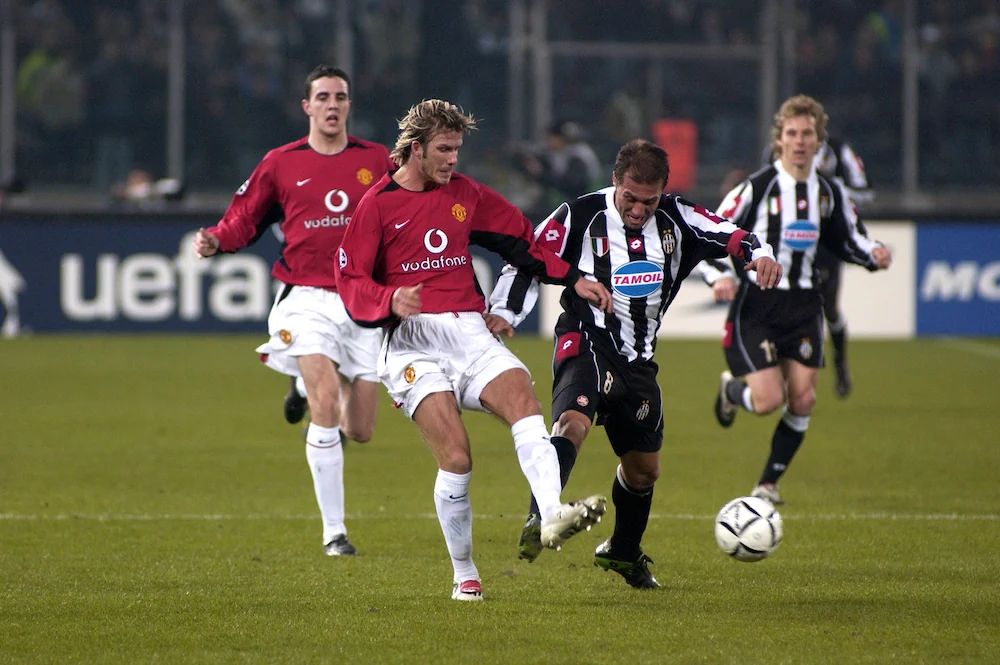
David Beckham duels with Juventus' Antonio Conte during a UEFA Champions League match in 2003
The Early Days
David Beckham started to make a name for himself at the United academy during the late 80s and early 90s. A London boy and a United fan at heart, he was a part of the legendary class of '92 from the Red Devils' youth system, also featuring the likes of Paul Scholes, Ryan Giggs, and Gary Neville.As the 90s rolled around, Beckham became a starter at the club after a short loan with Preston North End, becoming one of the most promising players in English football. And once Éric Cantona retired in 1997, he took the iconic number 7 and rose to greater heights, improving his production levels.
This included his commercial profile getting more recognition and even getting involved romantically with Victoria Adams, also known as "Posh Spice" from the Spice Girls. Ferguson wasn't a fan of this because he considered this a distraction from the player's perspective, although he didn't have any meaningful clashes with him during this portion of their collaboration.
The 2000s
The first major issue between the two parties was the fact that Beckham suffered a considerable injury during the 2001/02 season, but he still decided to go with England to the 2002 World Cup. This didn't sit well with Ferguson because he felt that the player wasn't fully committed to the cause and also that he clearly wasn't fit."A year prior to leaving us, of course, David had taken part in the 2002 World Cup in Japan and South Korea, weeks after breaking his metatarsal in the Champions League tie at Old Trafford in the spring of 2002," Ferguson recalled back in those days. "From the evidence of the tournament, David couldn't have been all right...I was surprised at how physically off the pace he seemed, because he was such a fit boy. So he couldn't have been fit, either physically or mentally."
Beckham went on record against this narrative, which probably didn't humor Ferguson very well.
"I know the United medical staff weren't all that happy about me going off to Dubai with the rest of the England squad to start our preparations for the World Cup," Beckham countered. "I think the manager assumed the week would just be a lark and that I'd stand a better chance of being fit if I stayed in Manchester and worked with the trainers at Carrington. I knew that, even when I went off to play for my country, I was still a United player. If the club had really put their foot down I'd have done what they said without thinking twice."
To make matters even weirder, as things were getting more difficult between the two of them, Beckham's mother, Sandra, decided to step in. The lady had a good relationship with Ferguson, going all the way back to the player's early days, although that didn't make his son happy, either.
"At 27, it seemed to me that I should be able to sort out my own problems at work. It was a real surprise to me that she'd done what she had," Beckham said. "I'd guess it was for the boss, too. She told me a bit about what had been said and one thing stuck in my mind: 'Do you know Sandra, the trouble with David is that everybody sucks up to him now.'"
As all of this was happening, Beckham was getting benched and rotated during the 2002/03 season, which would prove to be his last at Old Trafford. This also included a defeat against Arsenal where Backham didn't track back enough, which would spark a row in the dressing room between the player and the manager.
That event would lead to the legendary moment when Ferguson kicked a football boot that hit Beckham's face.
"The boss kept going: 'We told you about it before the game. The problem with you is you don't let anyone talk to you. You don't listen.' I couldn't believe it," Beckham remembered. "I'd been listening - and wanting to listen - my whole career. I'd listened to the boss since the first day we'd met and I was listening now. 'David. When you're wrong, you've got to own up.' 'Boss, I'm sorry. I'm not wrong here. This wasn't my fault and I'm not taking the blame for it.' 'No. Take the blame is what you're going to do.'"
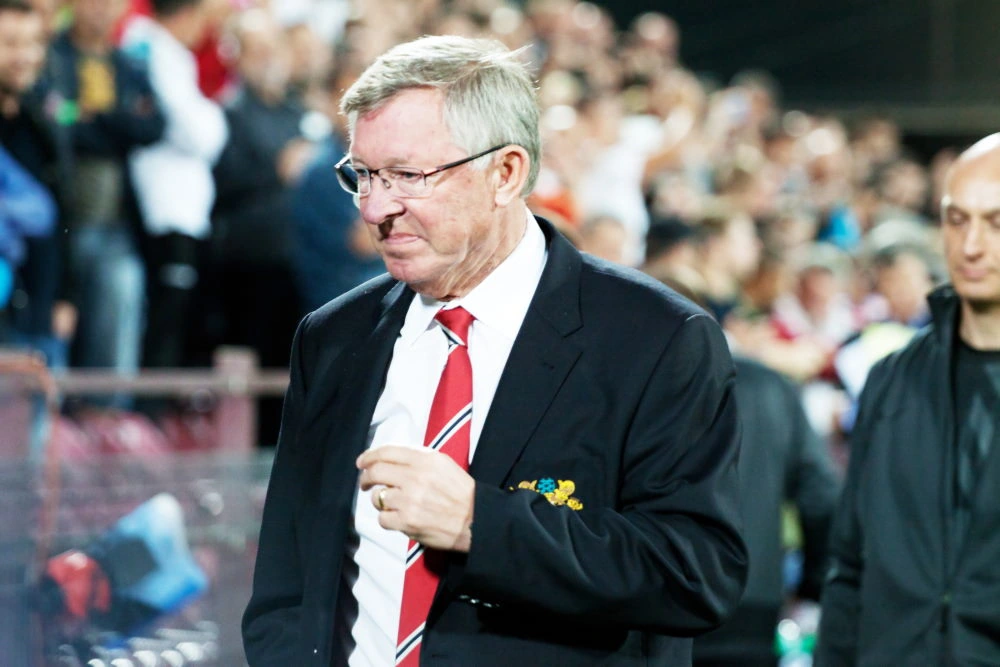
Alex Ferguson
The Aftermath
Most people in football know the story by now. Beckham was sold to Real Madrid in the summer of 2003, which would be a part of that club's Galacticos initiative to build a side with the biggest stars in the sport at the moment. Moreover, the Englishman's commercial profile was so big that year that it made sense for him to sign for a club of that nature.When it comes to Ferguson, this was the first steppingstone to reshape his current Manchester United squad. Beckham's replacement would be an unknown right winger from Portugal, Cristiano Ronaldo, who would take over the number 7 shirt and, as the saying goes, the rest is history.
Furthermore, the following market, United would sign English wonderkid Wayne Rooney, further demonstrating Ferguson's desire to revamp the squad. This is something that perhaps wouldn't have been possible without Beckham's exit, so there is an argument to be made that both parties in the end benefited from this separation.