
They Won the Golden Boot - But Their Teams Were Still Relegated
Winning the Golden Boot is one of the greatest individual achievements a footballer can accomplish during a season. As a rule, the top scorers tend to play for the league's leading teams, where talented attacking teammates and plenty of goalscoring opportunities create ideal conditions for scoring goals. But sometimes something far more unusual happens: a player scores more goals than anyone else in the league and wins the Golden Boot, yet his club is still relegated from the top division.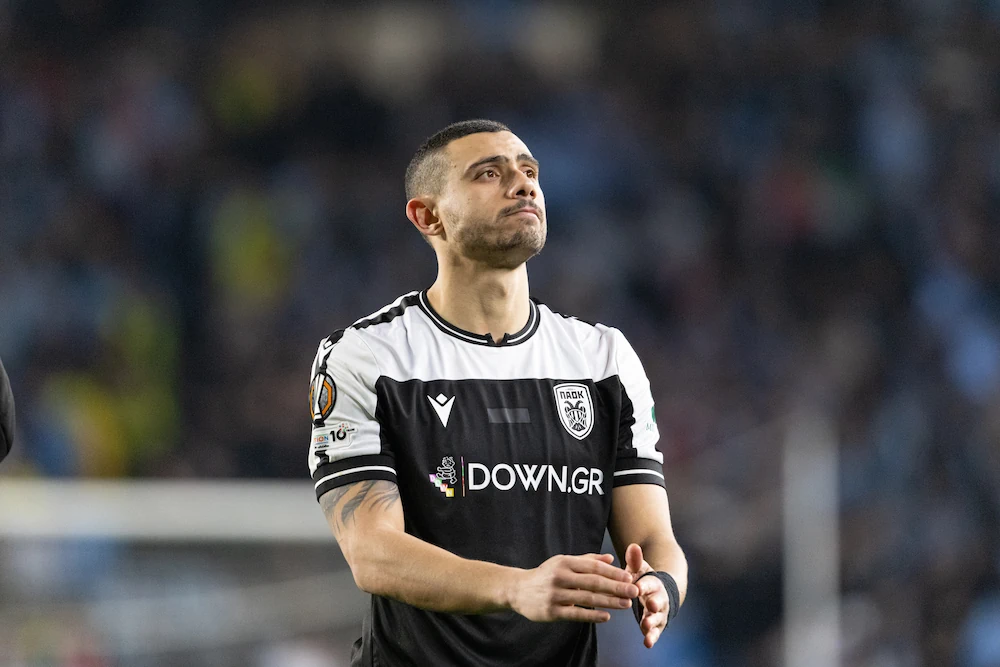
Giorgos Giakoumakis won the Golden Boot in the Netherlands in 2021, but his VVV-Venlo side were still relegated
Mick Channon - Southampton 1973/1974
One of the most classic examples comes from English football, during the 1973/1974 season. Southampton striker Mick Channon scored 21 league goals to finish as the top scorer in the old First Division, the predecessor to the Premier League and England's top flight at the time. Despite all his goals, Southampton finished 20th out of 22 teams and were relegated alongside Manchester United and Norwich City.By that time, Channon was already an established England international, known for his distinctive goal celebration in which he spun his arms around like a windmill. However, his individual success that season was not enough to keep Southampton in the top division.
Quini - Sporting Gijón 1975/1976
Two years after Channon's achievement, something similar happened in Spain's top division. Enrique Castro González, better known as Quini, won the La Liga Golden Boot with 21 goals for Sporting Gijon, but the club still finished bottom of the table and were relegated. Quini had therefore won the prestigious Pichichi Trophy, a major personal achievement, of course, but one that could not save his team.Quini stayed at Gijón even after relegation and helped the club make an immediate return to the top division. He also finished as the top scorer in the Segunda División the following season, 1976/1977, this time with 27 goals. He later played for Barcelona and won a total of five Pichichi trophies in Spain's top division.
Igor Protti - Bari 1995/1996
One of the most notable examples of this phenomenon in Serie A occurred during the 1995/1996 season. Italian striker Igor Protti scored 24 goals for Bari and shared the Golden Boot with Lazio's Giuseppe Signori. Meanwhile, Bari finished 15th and were relegated to Serie B.What makes Protti's achievement particularly remarkable is the level of competition in Serie A during this period. Big names such as Gabriel Batistuta, Enrico Chiesa and Oliver Bierhoff were among the league's leading attacking stars, but none of them scored more goals than Protti.
Protti did not follow Bari down to Serie B, instead moving to Lazio. He later also finished as the top scorer in Serie B and Serie C with Livorno, making him one of the few players to have won the Golden Boot in all three of the top divisions of Italian football.
Niklas Skoog - Västra Frölunda 1995
Swedish football also has an example of a top scorer whose team were relegated from the highest division in the very same season. In 1995, Niklas Skoog scored 17 goals for Västra Frölunda and won the Allsvenskan Golden Boot. The problem was that the team as a whole simply was not good enough to compete in the Swedish top flight. Västra Frölunda finished bottom of the league and were relegated after winning just five of their 26 matches.Skoog accounted for almost half of the team's total of 35 goals, an impressive individual achievement considering the team's limited attacking capabilities. Things worked out well for him personally, however, as he secured a move to German side Duisburg after the season. He later returned to Sweden and became a highly successful goalscorer for Malmö FF, where he also won the Allsvenskan Golden Boot in 2003.

©
Thomas Dalgaard
Thomas Dalgaard - Viborg 2013/2014
A more recent example comes from Denmark. In the 2013/2014 season, Thomas Dalgaard won the Danish Superliga Golden Boot with 18 goals in 33 matches for Viborg FF, but despite this, Viborg finished in the relegation places and were forced to leave the top division.What makes Dalgaard's achievement particularly interesting is that he actually won the Golden Boot in two consecutive seasons, but in different divisions. The previous season, he had scored 27 goals in the Danish second tier and helped Viborg win promotion. Following that up with another Golden Boot in the top division, while simultaneously suffering relegation, is an unusual combination of personal success and collective disappointment.
Giorgos Giakoumakis - VVV-Venlo 2020/2021
One of the clearest examples in modern European football occurred during the 2020/2021 season. Greek striker Giorgos Giakoumakis scored an incredible 26 goals in the Dutch Eredivisie for VVV-Venlo. His performances earned him a comfortable Golden Boot victory, finishing seven goals ahead of PSV Eindhoven's Donyell Malen, but his team still finished second from bottom and were relegated.Giakoumakis accounted for more than 60 percent of his team's 43 league goals, an almost unbelievable proportion, but Venlo also conceded a staggering 91 goals during the season. If anything, this is a perfect example of why even a fantastic goalscorer cannot always save a team from relegation. Although he had the satisfaction of winning the Golden Boot, he also entered the history books as the first player in Eredivisie history to finish as the league's top scorer and suffer relegation in the same season, a rather less positive distinction.
It is also worth mentioning that Giakoumakis joined Celtic rather than following Venlo down the league system, and during his first season in Scotland, he also won the Golden Boot there (shared with Regan Charles-Cook), although with a more modest total of 13 goals.
When Plenty of Goals Almost Earned the Golden Boot
There are also several well-known strikers who scored exceptional numbers of goals for relegated clubs without actually winning the Golden Boot.One such example is Dutch striker Jimmy Floyd Hasselbaink. While playing for Atlético Madrid in the 1999/2000 season, he scored an impressive 24 goals, but the club were nevertheless relegated from La Liga.
Another example is Andrew Johnson, who scored 21 Premier League goals for Crystal Palace in 2004/2005 but could not prevent the club from dropping down to the Championship.
We find similar figures in Italy, where Simy scored 20 Serie A goals for Crotone in 2020/2021, but the club were still relegated.
Despite their impressive goalscoring records, none of these three players managed to win the Golden Boot.
Football Is Ultimately a Team Sport
Although individual performances often decide matches, football is ultimately a team sport, and even the best strikers depend on what happens elsewhere on the pitch. A balance between attack and defence is essential for a team to function properly, which is why a club can have an exceptional goalscorer yet still lose match after match when its defence is not up to standard.The stories of Channon, Quini, Protti and the others clearly demonstrate how individual success and a team's results do not always go hand in hand. Individual brilliance may be enough to win the Golden Boot, but surviving in the top division requires far more than just one fantastic goalscorer.