
The Rise and Fall of Johan Cruyff's Dream Team
Johan Cruyff is considered the architect of FC Barcelona's footballing structure, and it is easy to see why. The Dutchman arrived in the 70s as a player and managed to change the mentality of a club with a profound inferiority complex in relation to Real Madrid. Moreover, Cruyff would return as a coach in the late 80s, revamping the institution and ushering in what was, at the time, the club's golden era.This is the story of how Johan Cruyff built Barcelona's legendary 90s team, the Dream Team. Let's begin.
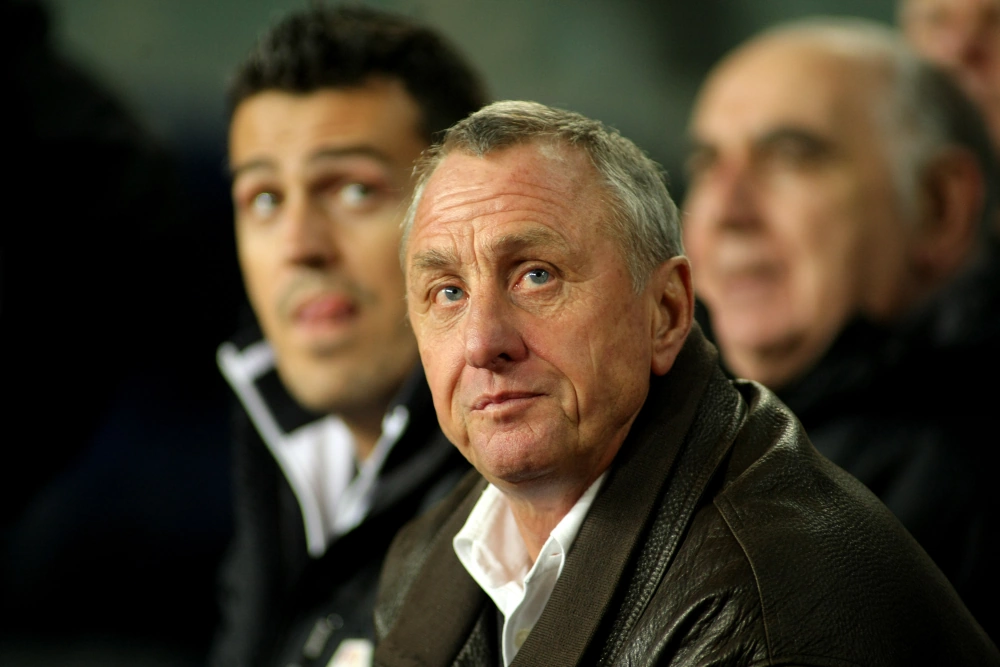
Cruyff Returns to a Club in Crisis
It is worth remembering how Barcelona were doing at the time. This was a club that had won the league title only once in the previous fourteen years, which led to an identity crisis. A lot of managers came and went while the club was attempting different styles, with widely varying results.Adding to this, the club were going through a major financial crisis and were burdened by substantial debt. However, Cruyff was no stranger to a challenge and returned to the club in 1988 as their manager after having thrived at the Camp Nou during the 70s as a player. He began to question common practices, defined what would become the club's overarching philosophy, and started to cull the squad to build a new one.
While he didn't win La Liga until 1991, three years after his arrival, Cruyff's project developed slowly and progressively. This could be seen in his influence on La Masia, Barcelona's youth academy. He spent a lot of time focusing on the young players and instilling the belief that technical ability and intelligence mattered more than physical stature.
Pep Guardiola, who would go on to become one of the Dream Team's most important players, rose through the ranks thanks to this philosophy.
If anything, modern Barcelona was largely defined by what Cruyff did back then, with the Dream Team providing evidence that his methods could work.
Building the Dream Team
As mentioned earlier, success didn't happen overnight for Johan Cruyff's Barcelona. However, every summer there was a small upheaval within the squad to form what would become the Dutchman's ideal side.
©
Danish Michael Laudrup was one of Cruyff's first signings
Moreover, Cruyff added Spanish players such as Txiki Begiristain, Miguel Ángel Nadal, Andoni Zubizarreta and Guillermo Amor. Interestingly, Miguel Nadal is the uncle of tennis legend Rafael Nadal.
The 1993/94 season also brought incredibly gifted Brazilian striker Romário to the side, adding even more firepower to what was already one of the best teams in the world at the time. Although somewhat mercurial, Romário's first season at the Camp Nou was remarkable and made the side even more competitive.
Barcelona Conquer Spain and Europe
Between 1991 and 1994, Barcelona won La Liga four times in a row, as well as the club's first European Cup in 1992, making Cruyff the most successful coach in the club's history at the time. It was a period of dominance the club had never previously enjoyed and they achieved this while playing stellar football that would define a generation.However, all good things must come to an end...
The Collapse of the Dream Team
The fall of the Dream Team has been attributed to a lot of different reasons. The most notorious moment in the Dream Team's decline was the 4-0 defeat to Fabio Capello's AC Milan in the 1993/94 UEFA Champions League final. It was a comprehensive defeat, made all the more damaging by Cruyff's public claims before the match that Barcelona were the better team.However, there was more to it. There were also persistent reports of Cruyff's deteriorating relationship with the board. The situation only worsened when Barcelona failed to win a trophy during his final two seasons, and he was eventually sacked in 1996.
Simply put, a combination of arrogance and natural decline took over. Zubizarreta left shortly after the final, and Laudrup soon followed, rubbing salt into the wound by joining rivals Real Madrid. Romário appeared to lose the motivation he had shown during his first season, while Stoichkov, despite his close relationship with Cruyff, temporarily fell out with the coach and also left the club.
After two trophyless seasons, Cruyff was dismissed. And while his standing among the Barcelona faithful would remain largely untarnished, there is no denying that the manner of his departure left a bitter taste for a lot of supporters.
Cruyff's Enduring Legacy
FC Barcelona and football as a whole wouldn't be the same without Johan Cruyff. The Dutchman redefined a lot of things in the game, both as a player and as a manager, and did so with the bravado and personality that defined him throughout his life.In many ways, the Dream Team was an extension of Cruyff as a person and as a football man. It was also the final period in which he was fully immersed in day-to-day management and perhaps the clearest expression of his footballing philosophy after he had hung up his boots.
Moreover, Cruyff's influence could be seen throughout Barcelona's success in the 21st century, with Guardiola and others at the helm.
"Cruyff changed my life and the lives of many players," Hristo Stoichkov said in 2017, as reported by Marca. "He took me out of a closed and communist country like Bulgaria in order to come to Catalonia and play for Barcelona. He worked in his particular way. He dedicated many afternoons to teaching me the things I had to do on the pitch."