
The dark legacy of Pablo Escobar in Colombian football
Pablo Escobar's drug empire shaped Colombian culture during the vast majority of the 80s, with a lot of people abroad associating the country mainly with his cartel. In that regard, Escobar's vast financial resources also went into his nation's football, both as a way to deal with tax regulations and to do money laundering, but also because he was genuinely passionate about the sport.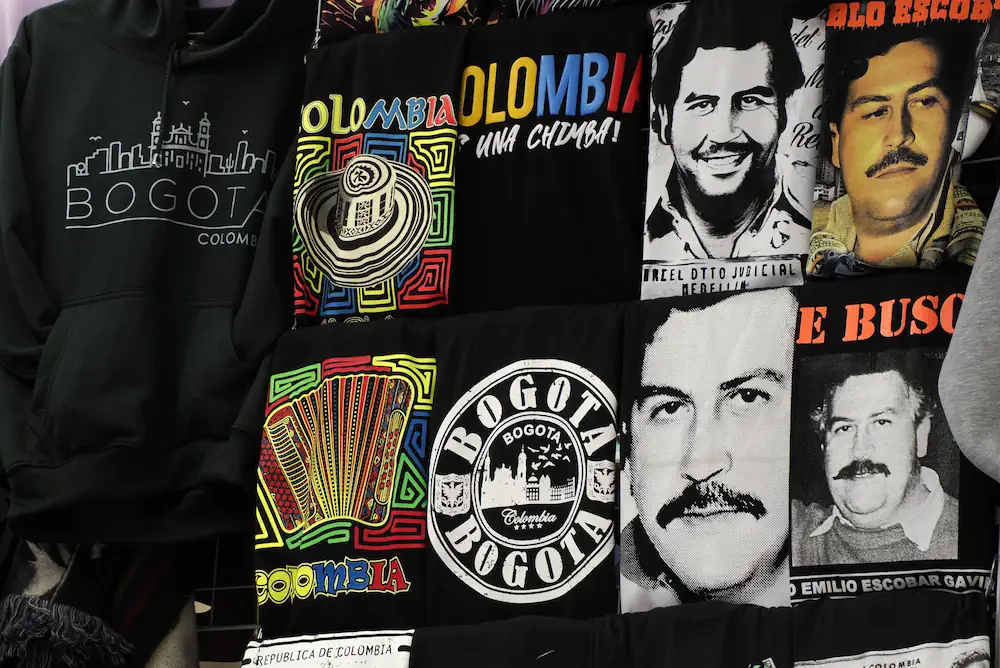
©
The Origins of Narcoball
For a long time, Colombian football was severely underachieving. While a country with a long tradition for the sport, the truth of the matter is that the clubs and the national team didn't have the facilities and resources to develop talent to compete with the likes of Brazil, Uruguay, and Argentina in South America.Enter Pablo Escobar. A rising figure in the world of drug-dealing, his Medellin Cartel, which was located in the city of Colombia it was named after, Escobar used his ill-earned money to boost Colombian football and, especially, the club of the city, Atletico Nacional, which would become a powerhouse by the end of the decade.
Therefore, by the time of the early 80s, Colombian football would begin to change and grow, leading to what many consider to be its golden age, although that comes with some massive footnotes...
Success Built on Violence
The truth of the matter is that Escobar wasn't the only drug lord in Colombia who was injecting money into football since it was an easy way for them to avoid several legal difficulties. However, he was among the most prominent, especially because of his general status as the kingpin of drug-dealing in his country.Moreover, Atletico Nacional became one of the richest clubs in South America overnight, bolstering the squad to a point where they could challenge for the Copa Libertadores, eventually winning it in 1989. This is the first time that a Colombian side would win the tournament, which makes it even more tragic that such a milestone had to be achieved through such tragic circumstances.
Furthermore, national rivals America de Cali would also play Copa Libertadores finals during these years, although without success. However, the results were not entirely clean, either, since there were a lot of rumors of match-fixing from Escobar's men.
Indeed, as per the information that has been spread throughout the years, the 1989 final against Paraguay's Olimpia had Escobar and his men pressing the referee and the rival players, which could have obviously played a role in the result.
Moreover, there have been statements and reports of players who were close to Escobar, such as then-Atletico Nacional and Colombia national team goalkeeper Rene Higuita, who would become known worldwide for making his scorpion kick save. These players would visit the drug lord in "La Catedral" (The Cathedral), the villa that he built in the early 90s when he was apparently in prison.
And so, Colombian football in the late 80s reached a point of massive success while covered in the shadows of corruption, death threats, a lot of innocent people dying, and endless violence. This is something that became quite prominent in the country as a whole and would continue likewise in the sports side of things.
A Golden Era With a Deadly Cost
It is somewhat ironic how the darkest period of Colombian football, at least when considering the endless amounts of corruption, also generated one of the best generations of players in the country's history.Led by Carlos "El Pibe" Valderrama, a gifted passer in the number ten position, the aforementioned Higuita, Freddy Rincon, and (later on) Faustino Asprilla, Colombia's national team would enjoy a period of success, qualifying for the 1990 and 1994 World Cups. Moreover, it was during the qualification stage of the latter that the national team, coached by Francisco Maturana, Atletico Nacional's manager when they won the Copa Libertadores, would gain worldwide notoriety, with even the likes of Pele and Johan Cruyff praising the side's flowing passing style.
Disappointment would arrive at American soil, however, during the 1994 World Cup where Colombia would lose the opening game against Romania, basically destroying the team's confidence. Later in the competition, defender Andres Escobar (no relation), would score an own-goal against the United States, and would be murdered by, presumably, members of a local cartel in Colombia.
Pablo Escobar was eventually killed when he was escaping from the law in his country in 1993, and perhaps his people didn't have anything to do with it, but Andres' death was the result of years and years of corruption in Colombia. It was the ultimate conclusion for a country whose football had been tainted with the blood of thousands of innocent men and women.
The Legacy of Narcoball
The presence of drug cartels in Colombian football would begin to wane as the 90s rolled around, which was both good and bad for the sport in that country. On the one hand, there was a lot of corruption and less risk of people dying, which is, above all else, the most important thing. On the other hand, the league would arguably never reach that level ever again, with the odd exception here and there of a team competing at the upper echelon in South America.It was a bizarre and tragic episode in that country, with Pablo Escobar's presence reshaping a lot of its society. There has been a lot of revisionism regarding his actions throughout the years, although it is worth pointing out that no contribution to football can justify all the innocent lives that were taken during his crime-riddled reign.
It was a tragic period for Colombian football and the country as a whole.