
The Biggest Collapses in English Professional Football
Here we like to talk about the positive stories of great historical teams or those that achieved great feats; however, today we bring you the other side of the coin: some cases of clubs that suffered major setbacks in English professional football. These stories include significant debt, management instability, and several relegations, mostly consecutive. All of these clubs have a long history in British football, but they have also experienced dark periods, which we will review below.
©
Portsmouth FC
In 2003, Portsmouth returned to the Premier League for the first time since the 1950s. In 2005, with the arrival of Harry Redknapp, they enjoyed a very successful period, where they among other things won the FA Cup and qualified for the UEFA Cup. The club assembled a talented and experienced squad featuring players such as David James, Niko Kranjcar, Lass Diarra, Nwankwo Kanu, Sol Campbell, Andy Cole, Glen Johnson, Jermain Defoe, and Peter Crouch.However, in 2009 they were forced to begin selling several of their best players to pay off their debts. Unfortunately for the club this proved unsuccessful, resulting in point deduction and a decline in their performance (they started with seven defeats in their first seven matches). They finished bottom of the table that season which of course led to a relegation and they were forced into administration.
The season after, their first one in the Championship after the relegation, they flirted with relegation once again, finishing 16th, but in their second year, they finished 22nd, relegating them to League One. The club continued to receive sanctions and were relegated again, finishing last in the third tier. Near the end of that season, ownership was transferred to the Pompey Supporters Trust, who took over until 2017, halting the club's decline and securing their return to League One eventually. Today, they are an established bottom-half team in the EFL Championship.
©
Bristol City FC
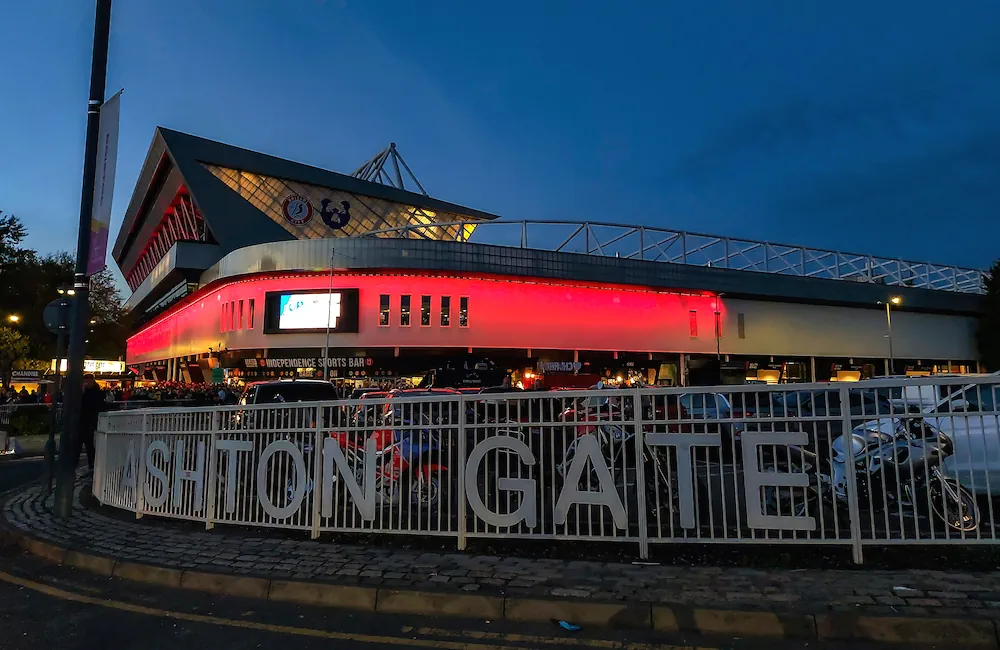
The Robins had mostly fluctuated between the second and third tiers (with a brief stint in the first tier at the beginning of the 20th century) until the late 1970s when they spent a few seasons in the First Division. At that time, regulations in the UK regarding player contracts were changing, meaning that upon expiration, players would be free to negotiate with any club they wished. Bristol City took the step of "tying down" their players with high-value, long-term contracts (more than seven years).In the 1979-80 season, they finished 18th in the First Division and were relegated (not the only time), which started a snowball effect that caused the club's problems to steadily worsen. In this scenario, the players didn't want to leave the club because they had long contracts with good salaries, but Bristol City, having been relegated, found it difficult to meet those commitments. This led to another relegation, as they finished second to last. Interestingly, the clubs' manager at the time was Bob Houghton, the same manager who had led Malmö to the European Cup final in 1979, with Roy Hodgson as his assistant.
The freefall continued for another year with yet another relegation, this time to the Third Division. Between 1980 and 1982 (747 days to be precise), Bristol City had plummeted from the First to the Fourth Tier, nearly leading to their demise and ultimately a change of ownership. The new owners reached an agreement with the eight highest-paid players to terminate their contracts, thus enabling them to begin the club's financial recovery. These eight players are known as the Ashton Gate Eight and are considered heroes of the club.
Sunderland AFC
Since the beginning of the 2010s, Sunderland had been fighting for survival, albeit with questionable management, having two or three managers per season in addition to constant changes in chairman and players. Names like Steve Bruce, Martin O'Neill, Paolo Di Canio, Gustavo Poyet, and Dick Advocaat graced the Black Cats' bench as leaders. In the 2015-16 season, the club sacked Advocaat in October and brought in Sam Allardyce, who incredibly managed to save the team from relegation despite spending 31 of the 38 Premier League matchdays in the relegation zone. Despite this achievement, Allardyce did not continue the following season, when Sunderland decided to hire David Moyes.That year, the team performed poorly, finishing at bottom of the league and sealing their relegation to the Championship after having avoided it for so many years. For that first year in the second tier, they decided to film a documentary with the intention of having audiovisual material of what the return to the Premier League would be like and how it's managed from within the club, and thus the famous Sunderland 'Til I Die was born.
However, things didn't go as planned, as after having four managers and two chairmanes and only 7 wins in 46 matches, the team finished last in the Championship and were relegated to League One, where they would film the second season of the documentary. In the 2019-20 season, the club had its worst finish in history, ending eighth in the third tier (League One), a significant achievement considering Sunderland is a major club in England, having won the First Division six times. The club would however stabilize itself again and be promoted to the Championship in 2022 and then to the Premier League in 2025, where they remain to this day.
Wolverhampton Wanderers FC
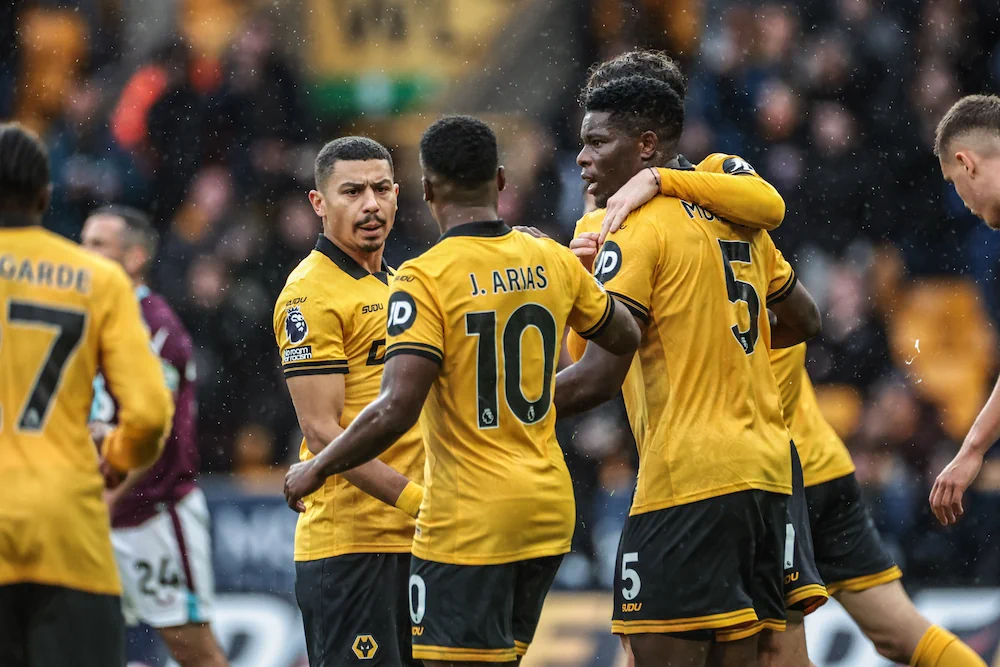
Wolves enjoyed their golden era in the 1950s, winning the First Division three times. However, in 1979, a multi-million pound renovation of Molineux Stadium left the club heavily in debt, and as we've seen, clubs with substantial debt often face difficult times. In 1982, they finished 19th in the First Division and were relegated, but surprisingly, they were back just a year later, finishing second in the Second Division. Their return was bitter, as they managed only six wins in 42 matches, finishing last and being relegated back to the Second Division, beginning their downward spiral.They suffered a second consecutive relegation to the Third Division and when it seemed that the situation could not get any worse, the Bhatti brothers' period as owners of the club arrived, which was as short as it was turbulent, resulting in them being relegated once again, falling into the Fourth Division, completely one of the biggest falls that English football can remember. After several years in the lower divisions, Wolves gradually rebuilt the club and were finally able to return to the top flight in 2009. Since then, they have moved back and forth between the EFL Championship and the Premier League, with the 2025/2026 season ending in yet another relegation to the EFL Championship.