
The Best Football Academies in Spain Beyond the Biggest Clubs
Football academies play a very important role in the sport, but sometimes, due to the large sums of money involved, especially in the world's top leagues, they are seen as less important. In Spain, the work of these academies is generally very good, and this has benefited many national and international clubs, and even national teams (especially the Spanish national team of course).Measuring the quality of a football academy is somewhat relative, but it does involve considering aspects such as the number of players they produce for the first team or other top-tier clubs, and the quality of the players themselves.
In this case, we will exclude the academies of the country's biggest clubs (Real Madrid, FC Barcelona, Atlético Madrid, Valencia CF, Sevilla FC, Real Betis, and Athletic Club) since, naturally, they tend to have the best academies.
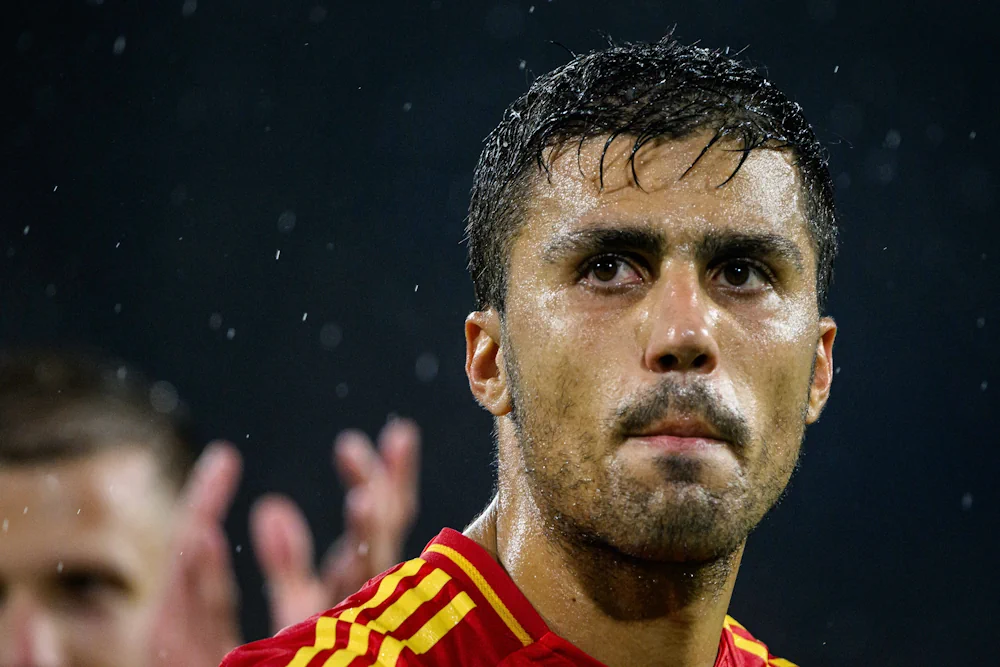
Ballon d'Or winner Rodri came through Villarreal's academy
Villarreal CF
The current reality of Villarreal is quite different from its history. Until 1998, the club had never played in La Liga, although today it is one of the most prominent and best-managed clubs in Spain. This growth is largely due to one person: the president and majority shareholder, Fernando Roig, who joined the club in 1997 and has since overseen excellent management, leading Villarreal to its current strong position. After reaching La Liga in 1998, Villarreal invested heavily in its academy and youth structure, and their development has been so significant that they are regularly represented in almost every Spanish national team squad.The club has followed a similar development model to Barcelona's La Masia, with a style focused on Tiki-Taka. According to estimates, in the last 20 years, Villarreal has had almost 50% of its first-team players come from its academy, a remarkable figure for a club in one of Europe's top five leagues.
Arguably, the best representative of the Villarreal academy is Santi Cazorla, who, in addition to playing for Villarreal itself, had stints at Málaga and Arsenal, and earned over 80 caps for Spain. Other notable names include Rodri, the Manchester City player who won the Ballon d'Or in 2024, Pau Torres, Yeremy Pino, Álex Baena, Samu Chukwueze, and Gerard Moreno.

César Azpilicueta is one of the players who came through Osasuna's academy
CA Osasuna
Osasuna is a century-old club that has alternated between the first and second tiers of Spanish football throughout its history. The Navarrese team has, as a club philosophy, prioritized players developed in its academy known as Tajonar, both for the talent they possess (which typically produces the best young players in the Navarre region) and due to the club's financial situation, which generally limits its ability to make big-money signings. At Osasuna, the first-team coach usually maintains a very close relationship with the academy coaches and players, facilitating their transition to the first team.The club faces a challenge in retaining its best academy players because it is not permitted to include release clauses for players under 16 years of age, allowing larger clubs like Real Madrid, Barcelona, or Athletic Club to acquire these promising talents from the Navarrese club at an early age. An example of this is Nico Williams, a native of Pamplona, who at the age of 11 moved from Osasuna to Athletic Club in 2013. Despite this, the club has managed to maintain around 50% of its first team players who came through the Tajonar academy in the 21st century. Examples of players who emerged from Tajonar include César Azpilicueta, Mikel Merino, Raúl García, Enrique Martín, and Aimar Oroz.

Antoine Griezmann, pictured here with Atlético Madrid, came through Real Sociedad's academy
Real Sociedad
As is common in Spain, clubs in the First or Second Division tend to focus on developing players from their region at the youth level; in Real Sociedad's case, this is the region of Gipuzkoa. This is one of the aspects that most benefits Zubieta (Real Sociedad's academy), as they have around 80% of their young players from that region. This makes life easier for the boys who don't have to leave home and have the expectation that the club will give them a chance for the first team, more so than at other clubs.This century, Real Sociedad's first team has had just under 60% of players developed at Zubieta, a percentage that, in the top five European leagues, is only surpassed by their regional rival, Athletic Club. Some players who came through Zubieta include Antoine Griezmann, Xabi Alonso, and Iñigo Martinez, but it's also noteworthy that other players developed at Real Sociedad, such as Mikel Oyarzabal and Martín Zubimendi, are important members of the current Spanish national team.
©
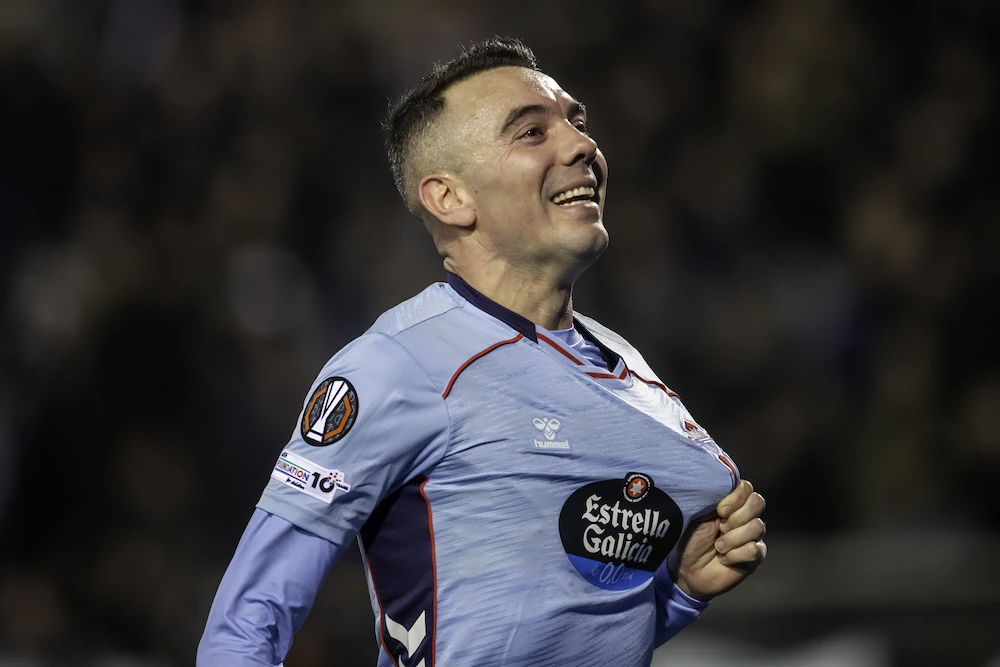
Iago Aspas came through Celta Vigo's academy and is also a club legend
Celta Vigo
The Galician club Celta Vigo has been a regular in Spain's First Division throughout its history and, along with Deportivo La Coruña, is known for nurturing the region's talent. At the beginning of the century, the team captivated all of Spain with players like Karpin, Mostovoi, Gustavo Lopez, Berizzo, and Sylvinho, most of them foreign players.However, difficult times followed in the Second Division, leading a club like Celta, which already had a certain amount of faith in its academy, to consider it the primary foundation of the first team. In fact, in recent years, under Claudio Giráldez and Marco Garcés, the commitment to the academy has become even stronger and has paid off handsomely for the Galician club.
Probably the greatest example of Celta's academy is Iago Aspas (besides being, perhaps, the greatest figure in the club's history), but there are also other excellent representatives such as Hugo Mallo, Brais Méndez, Joselu, and Fer López.

Keita Baldé, pictured here at Sampdoria, came through CF Damm's youth system
CF Damm
This is a special case within Spanish football, as Damm is a purely developmental club; that is, it doesn't have a first team, only teams for ages 6 to 18. Historically, it has remained in the First Division youth league, competing against the youth teams of Spain's top clubs.The club is located in Catalonia, so it's quite common for Barcelona or Espanyol to sign players from Damm, and this is reflected in the prominent players who have come through the club. Among these names are Álvaro Vásquez, Keita Baldé, Curro Torres, Marc Casadó, Joan García, and Víctor Vásquez.