
Sebastián Abreu at Deportivo and the Making of a Football Nomad
He may not have been a standout performer on the pitch, and his brief spell in Deportivo La Coruña brought little acclaim for what he did at the club's home ground Riazor. But Sebastián Abreu had qualities that went far beyond football. Friendly, outgoing and relentlessly cheerful, with more than a touch of eccentricity, he was a distinctive character who more than lived up to his nickname.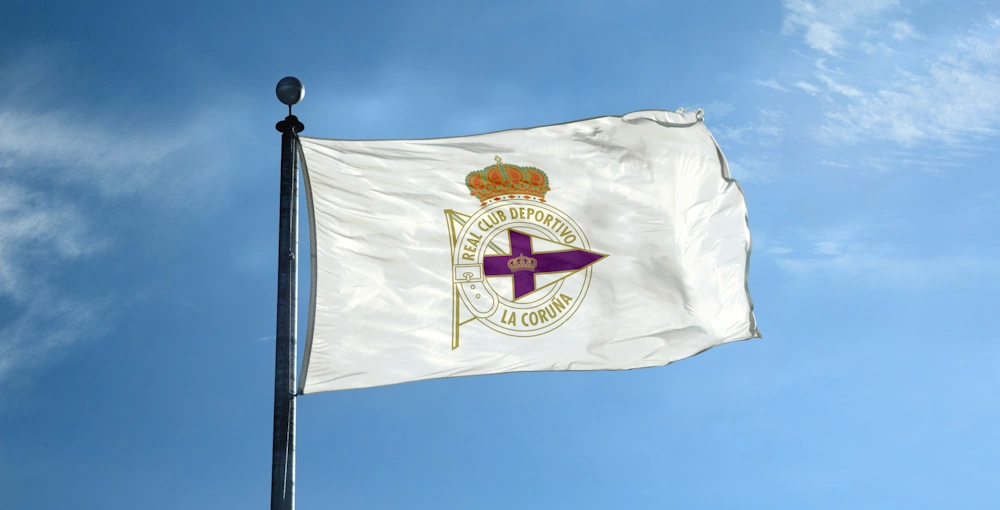
A High-Profile Arrival at Deportivo
Sebastián Abreu joined Deportivo in the winter transfer window of the 1997/1998 season following a big-money move from San Lorenzo de Almagro, where he had emerged as one of the leading scorers in Argentine football, netting 13 goals in the 1997 Apertura.Despite the unfortunate "no goal" against River Plate that had made him famous in Spain - when he rounded the goalkeeper but stumbled before he could score into an empty net - he arrived as a player strongly backed by Deportivo president Augusto César Lendoiro, who believed firmly in his talent and defended him in the press.
"He knew he was going to succeed; he was infinitely better than people in Spain were saying. Perhaps too young. People sometimes talk too much. A guy who played for Uruguay, who scored so many goals, and they make jokes about that miss. It's one thing to joke about the famous goal; he's proven how good he is by scoring countless goals."
His signing, announced on December 17, 1997, was meant to be pivotal during a highly inconsistent season, in which the Galician club was at risk of relegation, playing uninspired football despite having a roster filled with international stars. To improve their performance, Deportivo La Coruña invested more than 2 billion pesetas in five new players during the winter transfer window.
Despite his reputation as a goalscorer from Argentina, Sebastián Abreu, who was just 21 years old, struggled to meet expectations. He made 15 La Liga appearances during the second half of the season and scored only three league goals. One of his most significant contributions was a goal against Barcelona at Riazor, which helped secure a 3-1 win for Dépor over the Blaugrana.
Memorable Moments at Riazor
In his first six months at Deportivo, "El Loco" Abreu provided several memorable moments beyond simply cruising around town in a yellow convertible BMW M3. For example, after scoring against Real Oviedo on matchday 28, the Uruguayan striker unleashed his fury on an advertising hoarding, kicking it repeatedly in frustration over missed chances, before being restrained by Lionel Scaloni. Another memorable moment came against Real Madrid at Riazor, when his left boot slipped off during a play and the Uruguayan ended up kicking his own boot while barefoot - a completely unusual scene.His time in A Coruña, including preseason matches after 1998, was relatively short as a first-team player, even though he remained on the Deportivo payroll for six additional seasons before being permanently transferred to Nacional of Montevideo on August 31, 2004.
Years on Loan Around the World
In the summer of 1998, he was loaned to Grêmio FBPA in Brazil, and for the 1999/2000 season, he joined Tecos UAG on loan, where he became one of the top players in the Mexican league, scoring a hat-trick in seven minutes against Necaxa while sharing the squad with Ronaldinho's brother Assis. In the 2000/2001 season, he was loaned back to San Lorenzo de Almagro, where he made 25 league appearances and scored 10 goals.He returned to Nacional for the second half of 2001 before spending 2002 and the first part of 2003 on loan at Cruz Azul. He then had further loan spells at Nacional, Club América and Tecos UAG before eventually leaving Deportivo permanently for Nacional of Montevideo.
How Deportivo Changed His Career
"The reality check that helped me understand that if I wanted to be a professional footballer, I had to change a lot of my habits. I arrived when I was 21," Abreu told Relevo in 2023. "Back then, the top scorer in Uruguay or Argentina had privileges to train less. I had some leeway, even skipping a day or two. Not in Europe. There, you have to train like everyone else, go to the gym, eat better. I came up against strong defenders and I was embarrassed."
"We had a group of people who were concerned about me changing those habits. There was Mauro Silva, Donato, Manjarín, Paco Jémez, 'Toro' Acuña... They gave my ego a real jolt. The club wasn't counting on me and I had to leave, but I had to change my diet and get a personal trainer. I learned that culture at Deportivo and that's why I was able to play until I was 45."
A popular figure at many of the clubs he represented, Abreu's career reflected his personality: restless, combative, stubborn and unpredictable. Despite being a prolific goalscorer, his goals are unlikely to be the most remembered aspect of his career; those who know him instead speak of his unique character and his status as a much-loved figure in Uruguay.
Uruguay, Argentina, Spain, Brazil, Mexico, Israel, Greece, Ecuador, Paraguay, El Salvador and Chile - Abreu's extraordinary journey across 11 countries also gave him something he values just as highly as his footballing achievements:
"...above all, personal growth. I've also learned languages, idiosyncrasies, playing styles, and football mentalities. This has allowed me to adapt quickly, regardless of where I arrived. I've adapted to each new world I've entered, rather than trying to adapt my world to that country. That has been a crucial factor in my being quickly accepted, valued, and liked. Furthermore, I've always been open to learning from everything and everyone, which has allowed me to grow and adapt," he says.
Moreover, his time at Deportivo arguably laid the foundations for his prime years during the 2000s, as he drew on what he had learned in Spain throughout his subsequent career at clubs around the world. It was a remarkable journey for a player who became one of football's great nomads.