
Os Santasticos and the Golden Age of Santos
In that select group of football teams that can sit at the table of the greatest in history, the great Santos of the 1950s and 60s, with one name that stood out above the rest, cannot be left out: Pelé. However, despite O Rei being the focal point, the rest of the team were also highly talented players who shone brightly by themselves. That Santos team not only marked an era because of its dominance in the tournaments it participated in, but also because of the way it played. It is one of the teams most closely identified with the famous Jogo Bonito of Brazilian football, which made its achievements even more remarkable.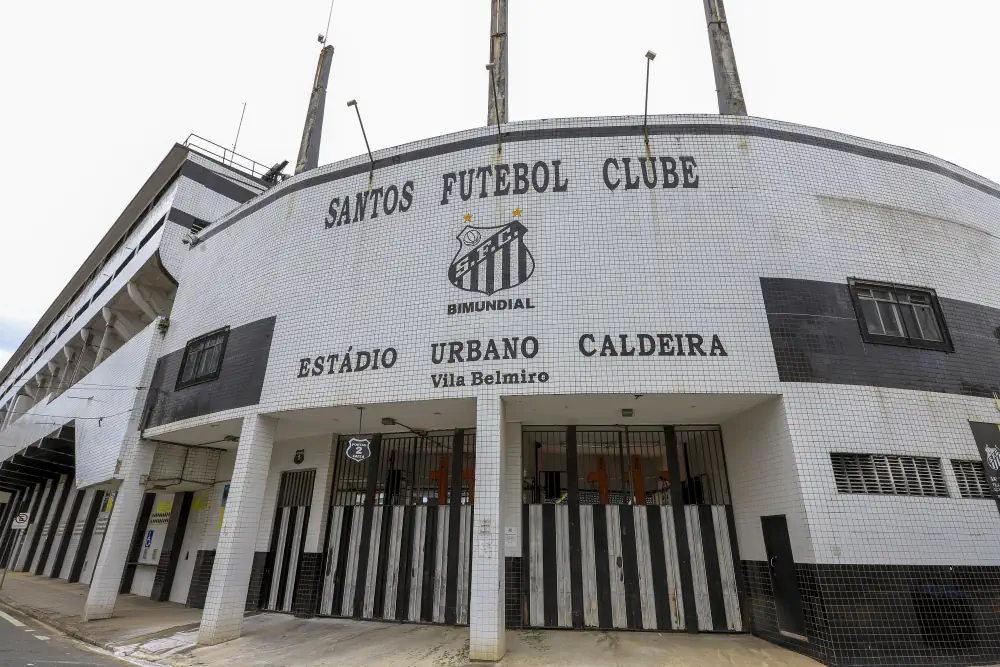
The Birth of Santos FC
At the beginning of the 20th century, the city of Santos, with its access to the sea, became an important hub for imports and exports in Brazil. This led to an influx of wealthy residents who desired greater prominence for the city in various fields, including sports. Thus, two clubs were founded: Clube Atlético Internacional and Sport Club Americano. The former disappeared in 1910, and the latter was relocated to São Paulo just a year later, leaving Santos without a representative football club at the regional level. This led to many conversations and meetings in 1912, which ultimately resulted in the formation of a new club, Santos Football Club.The newly created club began to participate in a city tournament called the Campeonato Santista, which it quickly began to dominate, although it was a little more difficult at the regional level since its first Campeonato Paulista was in 1935. That was the first and only official title of a certain level that the club would win until the 1950s.

©
Pelé Arrives and Santos Takes Off
Santos would win another major title in 1955, once again the Campeonato Paulista, thanks to Emanuele Del Vecchio, a young striker who had come up through the club's youth system, Zito, who would become a club legend, having played over 700 matches for Santos, and Pepe, another product of the club's academy who would spend his entire career at Santos and who, according to himself, is "the all-time leading scorer for Santos. Pelé doesn't count because he was an alien." Speaking of Pelé, just a year later he would arrive at the club on trial, recommended by Waldemar de Brito, a former Brazilian international. The young Pelé, who was only 15 years old at the time, impressed in his trial and signed a contract with Santos and a couple of months later, he was making his debut with the first team in a 7-1 rout of Corinthians of Santo Andre, scoring his first of many goals (more than 1000 according to some unofficial sources) in his career.That same year, 1956, other names arrived who would become very important to Santos' history, but who were perhaps overshadowed at the time by the emergence of Pelé, who, at just 15 years old, was becoming a sensation in Brazilian football. Among those names was Dorval, a young winger from Forca e Luz. That year, Santos won the Campeonato Paulista again. By 1957, Pelé was an undisputed starter and was beginning to score more goals than he played, although ironically, this wasn't enough for the team to become champions again. That season, a young talent named Coutinho arrived at the club, although he wouldn't make his debut with the first team until 1958.
Coutinho was a striker with an exceptional nose for goal and remarkable ease in the penalty area. In fact, many years later, Pelé himself would say that Coutinho "within the area, was better than me. His composure was something supernatural." The Pelé-Coutinho partnership brought Santos countless moments of joy. That season, Santos would once again be crowned champion of the Paulistão, and just when it seemed the regional championship was becoming too easy for the team, the Brasileirão, Brazil's national league championship, began in 1959. As Paulistão champions, Santos played in the national tournament, which at that time was only open to regional champions. Pelé's team reached the final against Bahia, which required a tie-break, a third match, where Santos was defeated 3-1.
From National Dominance to Continental Glory
In 1961 they would return for revenge in the Brasileirao (remembering that, not being Paulista champions in 1959, they could not compete in the Brasileirao of 1960), reinforcing themselves with names such as defender Calvet, midfielders Mengalvio and Lima, and the starting goalkeeper of the Brazil national team, Gilmar. Knowing they had a formidable attack, Santos sought to reinforce their defense and midfield, which allowed them to win the Brasileirão that season, ironically facing Bahia again in the final. Having triumphed in Brazil (something they would do for the next four seasons), Santos set their sights on a new challenge: the international stage.The Brasileirão title granted them access to the Copa Libertadores, a tournament in its third edition, which Peñarol had won the previous two. In the group stage, Santos proved far superior to their rivals, scoring 20 goals in 4 matches. In the semifinals, they faced Universidad Católica of Chile, a tougher opponent than expected, although the Brazilian team ultimately prevailed 2-1 on aggregate. In the final, they faced the two-time continental champion, Peñarol. The first leg was a 2-1 victory for Santos, while the return leg went to the Uruguayans 3-2; both teams won away from home, interestingly enough. At that time, a third match was played to decide the champion at a neutral venue; in this case, it was played at the Monumental Stadium in Buenos Aires. Santos won that match 3-0 with a brace from Pelé.
This was just the beginning of what would become a team that would repeat its continental success the following season, in addition to winning its respective regional (Paulistão) and national (Brasileirão) trophies, and also the Intercontinental Cup, in which they defeated Eusébio's Benfica. Pelé scored 5 goals across the two matches against the Portuguese team. Santos is considered the first team to win a continental treble thanks to their performance in 1962. By this point, having triumphed over the European champions, Santos was beginning to be considered the best team in the world. At that time, there wasn't much economic difference between Europe and South America, so teams from the South American subcontinent could more easily retain their talent. This explains why the Santos team was able to maintain its dominance for several seasons, until the mid-1960s.