
Manchester United's Golden Years And Seasons
Manchester United's late 90s and 2000s supremacy wasn't accidental. It's easy to say that now, but at the time it felt like something building rather than something fully planned out. Recruitment played a part, but so did personality. Some players scored, others shifted the feel of a game, and often the two blurred together in a way that made the team hard to read from the outside.Pubs left and right across England would have fans piling in debating United's Premier League dominance, and conversations would always land on the same topic - who actually scored, and who would score next. Bookmakers of the era were paying close attention to Premier League outright odds as much as any football commentator was, regularly shortening United's prices based on multiple sources of goals rather than reliance on any single striker. Cole and Yorke across the 1998-99 Premier League period is a great example of how odds didn't just shift, they toppled completely, markets recognising what football was actually showing in real time.
©
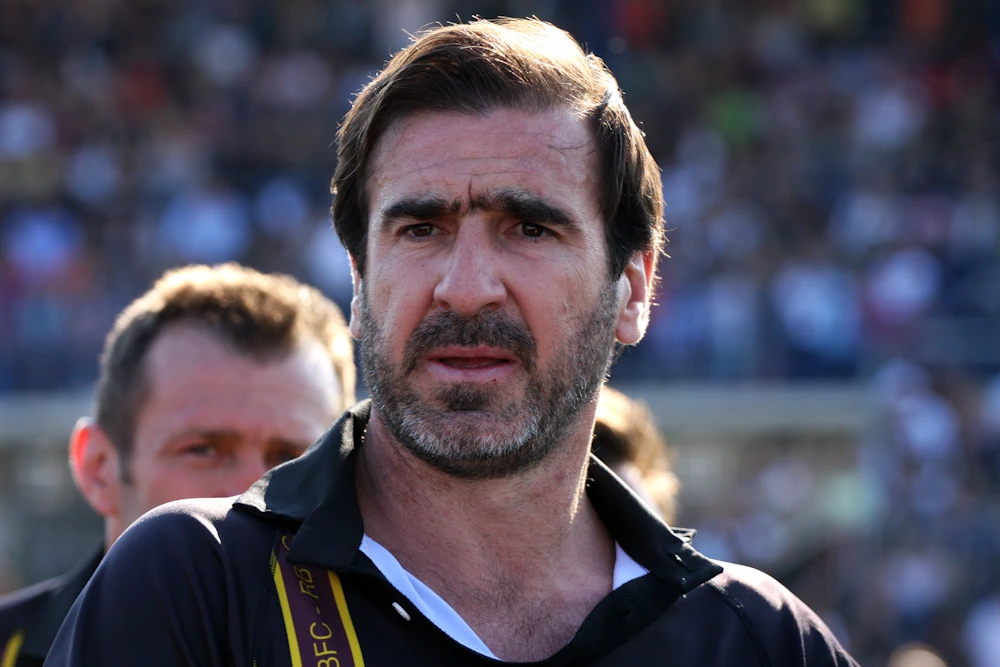
Eric Cantona
From Cantona's ignition to the Cole-Yorke chemistry
Eric Cantona didn't just turn up and score goals. It felt different to that. You'd watch him at United's Old Trafford, collar up, taking his time with everything, and somehow the game just seemed to slow around him. Not in a dramatic way, just enough that you noticed it after a while. It wasn't only what he did on the ball either. The reaction around him said a lot. The players were a little more confident while playing the game, whereas the opposition was a little more careful. Not many can figure out this subtle thing, yet it exists.Ferguson made good use of it, but never stuck with one thing too long. The arrival of Cole and Yorke once again changed the whole situation. Less about individual presence, more about understanding. Little movements, quick passes, chances appearing almost out of nowhere. You didn't always notice it straight away, but over a season it added up. Games that might have drifted ended up won.
1998/99 and the anatomy of clutch scoring
That Treble season still gets talked about for obvious reasons, the late goals, the drama, the sense that something would happen even when it looked unlikely. But if you go back and actually think about it, a lot of the goals weren't spectacular.They were just... well-timed. Sheringham in the right place, Solskjær turning up when it mattered, midfielders chipping in without making a big thing of it. It wasn't about one player carrying everything. It was more like a steady flow of contributions that kept them moving forward.
Over a full season, that's what tends to matter more than the big moments people remember.
©
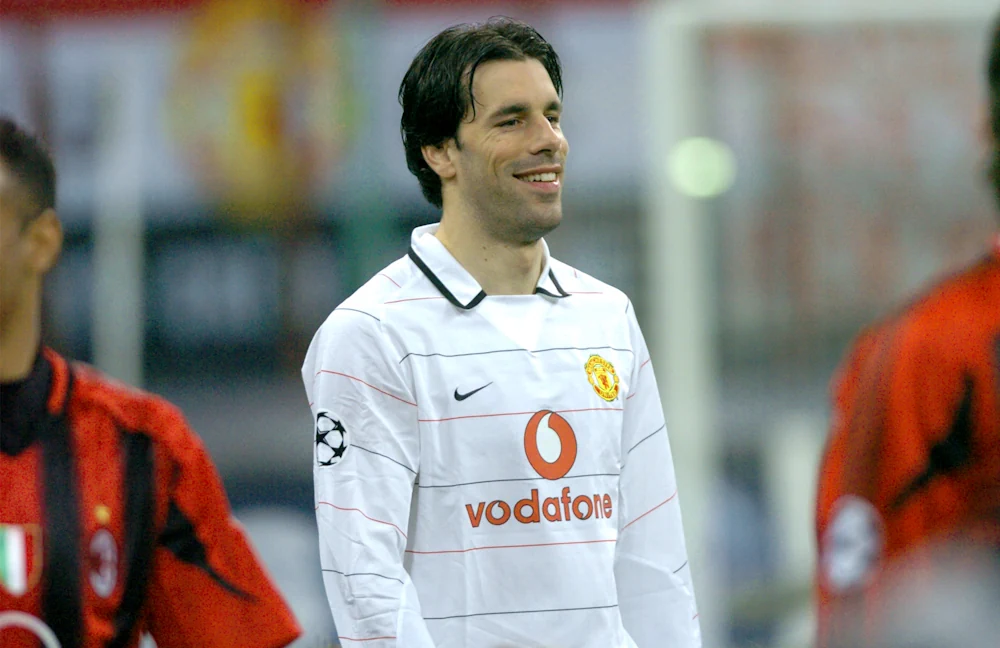
Ruud van Nistelrooy
The shift to a single-figure predator
Ruud van Nistelrooy felt different when he came in. Less about presence, more about certainty. He didn't need to change the atmosphere. He just scored. Again and again, often from the same kinds of positions. Watching him wasn't always dramatic, but it was reliable. You knew what he was there to do, and more often than not, he did it.That kind of consistency changes how a Premier League team plays. It gives a manager something to work with, something predictable in a game that usually isn't.

©
Wayne Rooney
Reinvention through versatility Rooney and Ronaldo
Then it shifted again. Wayne Rooney came in with a kind of urgency that didn't really need explaining. He could do a bit of everything, score from distance, drop deep, get involved wherever the game needed him. Cristiano Ronaldo took longer to become what he eventually was. Early on, it was flashes, stepovers, moments. Later, it turned into goals, lots of them.Between the two of them, United had options. If one had a quiet game, the other could step in. That made a difference over a long season. It meant they weren't relying on one pattern holding up.
What the season-by-season pattern teaches us
Looking back at those teams, a few things stand out, but not always in a neat way. Personality mattered, more than just numbers. Some players lifted the level around them without it showing up directly in stats. At the same time, having different types of scorers helped. Someone in the box, someone creating, someone who could change a game late on. And then there's consistency. Not in a perfect sense, but enough of it. Knowing roughly where the goals are coming from, even if not exactly when.For anyone trying to read a season, those things tend to come up again and again. Goals, availability, role in the team. They don't guarantee anything, but they narrow things down.
Legacy and practical takeaways
Those United sides weren't one fixed idea. They changed over time, sometimes quite quickly. From Cantona's influence to partnerships, then to out-and-out finishers and finally to Premier League players who could do a bit of everything. Different approaches, but the same underlying point.If you can rely on goals from players you trust, you give yourself a better chance than most.It sounds simple when you put it like that, but it's usually where the difference is made.