
Galatasaray vs Fenerbahce and the Origins of Turkey's Biggest Derby
Known as the Eternal Rivalry Match or the Intercontinental Derby, the match between Galatasaray and Fenerbahce is one of the most heated and intense rivalries the world of football has to offer. As the top winners in Turkish football, they often face each other in title-defining contexts, further fueling a rivalry that, in various contexts, is already quite strong.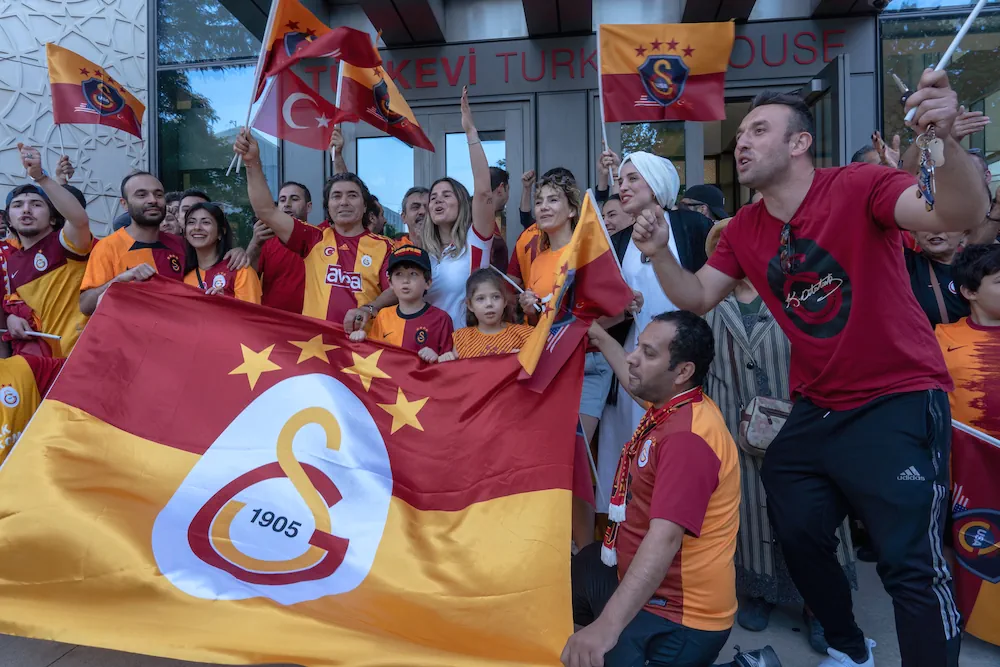
History of Galatasaray
The club from the European side of Istanbul was founded in October 1905 by Ali Sami Yen and a group of students from a school in the city that was, at that time, almost 500 years old, the Galata Palace Imperial School, which in Turkish is Galata Sarayı Enderun-u Humayun, from which the name Galatasaray comes. The club is the first of its kind in Turkey. Another Istanbul club, Besiktas was founded in 1903, but they did so as a gymnastics club and then formed the football section in 1911, unlike Galatasaray, which was born from the beginning as a football club.At that time, there was still no established football league in the empire (remembering that at that time it was the Ottoman Empire), so they competed against Greek and English teams that were in the area. The latter, as we know, had been exporting the sport to other regions, in a league based in the city of Istanbul. Galatasaray won it for the first time in 1909, their fourth participation. The club would win the next two editions, beginning to establish itself as a power in the city.
©
History of Fenerbahce
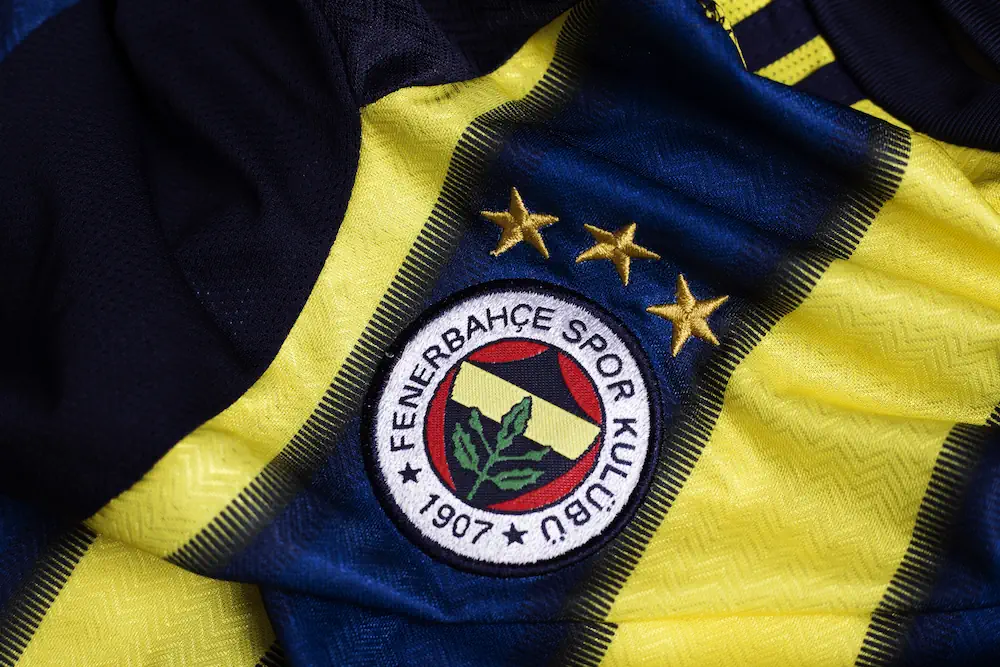
The club's founding was the brainchild of Nurizade Ziya Songulen, a descendant of a high-ranking Ottoman official. He had gone to study in England, where he became passionate about football. Upon his return to Ottoman soil in 1906, he sought to introduce the sport to his hometown of Istanbul. However, after contacting many acquaintances and friends, it was in 1907 that he was finally able to form a registered football team. Ziya Songulen himself served as a player, manager, and the club's first president.Although the team members were from Moda, a small neighborhood in Istanbul, there was already a team with that name (Moda FC), and therefore they were unable to take it over, so they took the name Fenerbahce based on a lighthouse with the same name, a historic symbol of Istanbul's Kadikoy district. In 1908 they would join the city league and in 1912 they would win their first league title and not their last as the club was the league's biggest winner (16) until the formation of the Turkish league in 1959, whose first edition they also won.
Rivalry
At the beginning of the clashes between the two teams, there wasn't really a rivalry remotely resembling what it is today, both due to the era and the fact that Galatasaray already had a slight advantage, having become more established in the Istanbul league. The first match between the two teams was played on January 17, 1909, at Fenerbahce Stadium, a match that ended 2-0 in favor of the visitors. Interestingly, Fenerbahce didn't beat Galatasaray until almost five years later, in January 1914, considering that they were crowned champions of Istanbul in 1912.Another interesting fact about the era is that in 1912, even though the bitter rivalry between the two clubs had not yet existed, a proposal was made to merge the two institutions with a view to forming a much stronger Istanbul football club. However, the merger never materialized because the First Balkan War broke out that same year. The turning point that sparked the rivalry between the two clubs was a friendly match played on February 23, 1934, at Taksim Stadium.
Both Galatasaray and Fenerbahce went into the match with the intention of winning, but at no point did the friendly atmosphere that is expected in a match of this nature exist. The match was very rough and tense, and the referee was unable to handle the situation, which ultimately led to fights on the pitch between players from both teams. This culminated in a full-throttle brawl both on and off the pitch, as fans also began to argue amongst themselves.
Ultimately, the match was suspended, although the rivalry between the two teams was just beginning. The match was like a snowball that grew larger and larger over time as other factors began to mix, such as geographical factors (remember that Fenerbahce is in the Asian zone of Istanbul while Galatasaray is in the European zone), social factors, and the Turkish passion for football that usually overflows in these types of matches.
As we mentioned, the first Turkish league title as a national competition, in 1959, was won by Fenerbahce. At that time, the league was divided into two groups, with each of the Istanbul giants in a separate group, and the group leaders faced each other in a home-and-away final. Both Galatasaray and Fenerbahce finished first in their groups and faced each other in a final that saw Galatasaray take a 1-0 lead in the first leg, but their rivals won the second leg with a resounding 4-0 victory, meaning the title went to Istanbul's Asian side. Both clubs are the most successful in Turkish history, and that's why they've had many decisive clashes like this throughout the history of Turkish football, which often increases the rivalry.
Possibly one of the most memorable moments in the history of this derby was the 1996 cup final. That season, Galatasaray was managed by the ever-unique Scottish Graeme Souness, and the club wasn't having a good season, although they did reach the cup final, which, as you might imagine, was against Fenerbahce, managed by Brazilian Carlos Alberto Parreira. The "Scottish team" won the first leg 1-0 at home, but in the second leg, their opponents also won 1-0, leading to extra time. The atmosphere, which had already been very heated before the final, was figuratively on fire and finally exploded when Galatasaray's Welsh striker Dean Saunders scored what would be the title-winning goal in the 116th minute. After the match ended, Souness entered the pitch with a huge Galatasaray flag and planted it in the middle of the Fenerbahce field, which caused the fury of the home team, which led to the Scot leaving the stadium under protection.