
From Washington Back to Toronto and Vancouver: Mapping Canada's 2026 World Cup Route After the Draw
From the moment FIFA's draw ceremony lights dim in Washington's Kennedy Center, Canada's path through 2026 starts to look more like a travel itinerary. The draw will fix opponents and bracket pathways.
The result is a World Cup route that runs from a glamorous evening on the Potomac straight back to Toronto's waterfront and Vancouver's skyline-framed BC Place.
Inside the Kennedy Center Draw: Pots, Seeding and Canada's Group Landing
On 5 December 2025, the world's cameras turn to Washington, D.C. FIFA's procedure divides the 48 qualifiers into four "pots" of 12 based on the November rankings. But we already know that all three hosts are going to be in the first pot.The B1 position ensures that the national team starts its journey on 12 June in Toronto. And what about the other teams in the group? They'll be chosen during the draw from other pots. There's also an important rule that keeps teams from the same region from being placed together.
What else you should know is that the highest-ranked giants won't have to face each other in the beginning of the World Cup. So, it's known for sure that the Kennedy Center evening does not change Canada's cities or dates, those were set earlier. But it will define just how punishing Group B will feel.

Three Games at Home: How FIFA's Scheduling Keeps Canada in Canada for the Group Stage
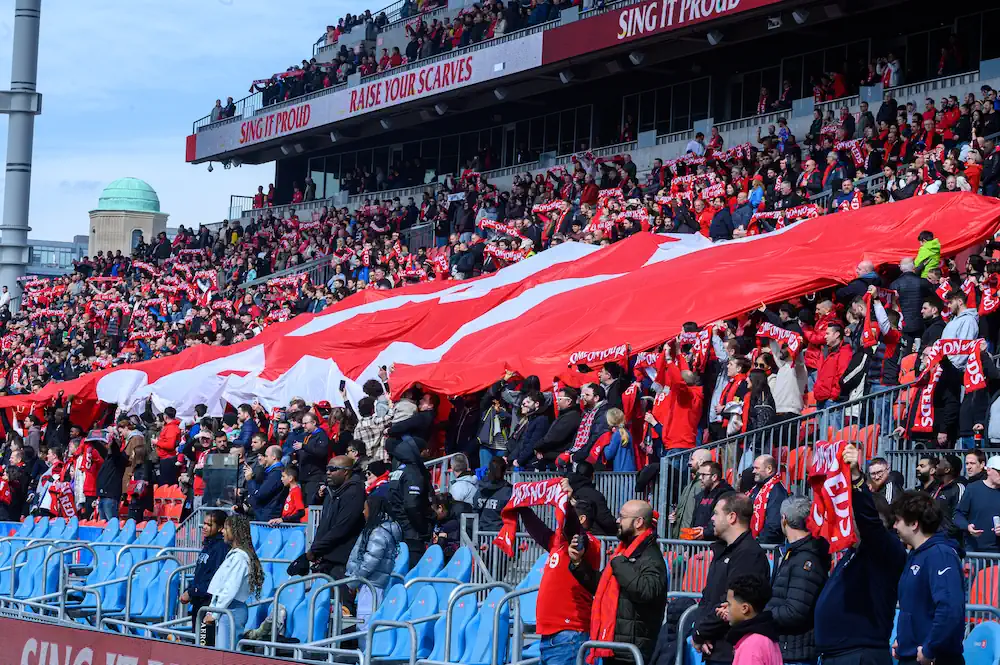
Because host countries stay fixed in the schedule, FIFA has basically guaranteed Canada a fully "made-in-Canada" group stage. The updated match plan gives every host nation three home games. This will definitely help reduce travel, fatigue, and fairness issues in a 48-team tournament.For Canada, that means one matchday in the East and two in the West. The opener is locked for Toronto Stadium on 12 June. And this is going to be the first men's World Cup game ever played on Canadian soil. Then, the team flies west but stays at home. Vancouver fans will support their team in the second game. The final matchup also takes place at British Columbia Place, which turns Vancouver into Canada's de facto tournament base.
Likely Dates, Kickoff Times and Climate Considerations
The dates and cities are already set, so fans can already explore betting odds in Canada and make their forecasts. Toronto, 12th, and Vancouver 18th and 24th - those are the dates we should rememberFor travellers, the matches in Toronto and Vancouver create a simple itinerary. You start on Lake Ontario, then follow the squad to the Pacific coast. It's a real relief compared to jumping between U.S. hubs. It is logistically friendly and relatively gentle in climatic terms.
However, both cities have recent experience of wildfire smoke and heat spikes. So organisers are building contingencies, from flexible kick-off windows to air-quality protocols. Where possible, they'll use covered venues across the tournament.
If Canada Advances, Where Could the Team Go?
The further locations depend solely on the team's result in the Group stage.If Canada wins the group, it stays in Canada. The winner goes back to BC Place for a first knockout-round game. It will be on 2 July against a third-place team from another group. If Canada wins that, the round of 16 also stays in Vancouver.
However, finishing second changes the story. The Group B runner-up will meet the Group A's runner up in LA. And all later games will also be staged in U.S. venues.
If Canada makes it to the knockouts in third place, this would also push the team onto the road immediately, into a game against a group winner outside Canada or Mexico.
So, you see once Canada leaves Vancouver, every subsequent step will run through American stadiums.
©
What Toronto and Vancouver Could Gain From Canada's Path
Three guaranteed games at home and a real chance of knockouts in Vancouver concentrates spending power in Toronto and the Lower Mainland. FIFA's impact assessment estimates about 3.8 billion Canadian dollars in economic output from Canadian hosting. On average, each match generates roughly 155 million dollars in GDP and 1850 jobs.For businesses, the World Cup will become an economic accelerator. Here are the main revenue channels:
- Visitors will spend time in hotels, restaurants, and retail. Vancouver is going to welcome over a million people, so the total money flow is significant here.
- Infrastructure upgrades, from BMO Field's expansion and transit works around Exhibition Place to stadium and mobility investments linked to BC Place and the Hastings Park fan festival.
- New jobs across hospitality, security, transport, and media will be created. Some of them will exist even after the event.
- Due to global media exposure, both cities will be known as hubs for major events, education and investment. That may accelerate tourism and improve immigration strategies.
This means Canada's route is not just a sporting storyline. It also underpins an economic strategy designed to turn football crowds into long-term urban and national gains.
Conclusion
After the Kennedy Center draw, Canada's World Cup path finally has shape as well as stakes. The names filling Group B will decide difficulty, but geography and dates are already unmistakably favourable.Today, there are three group games at home. Then, a potential round-of-32 and round-of-16 doubleheader could still happen in Vancouver. Only from the quarter-finals onward does the dream shift decisively into U.S. territory.
And for fans, the draw offers a route you can map, book and imagine long before the first whistle blows.