
European Finalists Who Fell Out of the Top Tier
Football is a rollercoaster; sometimes you're on top of the world, and sometimes you're at rock bottom. We have many examples of teams that have reached European competition finals and now aren't even playing in the top tier of their respective leagues (in the season of 2025/2026). The list considers Champions League (earlier called European Cup), Europa League (earlier called UEFA Cup), Europa Conference League, and Cup Winners' Cup finals, with updates added after the 2025/26 season where relevant. Here are 16 teams that used to fight at the top of European tournaments but are now finding themselves struggling in lower divisions.SC Bastia
Bastia, from the island Corsica, is a club with over 120 years of history. In its early days, it played in the lower divisions until the 1960s, when it began a climb that included three promotions to reach the top tier of French football (then called the Division Nationale).In 1977, they finished third in the league (their best-ever finish to date), which earned them a place in the UEFA Cup the following season. Surprisingly, Bastia reached the final of that UEFA Cup against PSV Eindhoven, drawing the first leg 0-0 but losing the second leg 3-0.
In 2017, the club went bankrupt and had to take the place of its reserve team in the Championnat National 3 (fifth tier) to avoid disappearing. From there, they began a gradual ascent that has now taken them to Ligue 2.
Update: Bastia were relegated to the Championnat National after finishing second-bottom in Ligue 2 in the 2025/26 season.
Videoton FC Fehervar
The Hungarian company of the same name founded the club in 1941 for its own employees, and in the 1960s they began competing in the top tier.In 1985, Videoton reached the UEFA Cup final, eliminating teams like Manchester United and Paris Saint-Germain along the way. The final was against Real Madrid's "La Quinta del Buitre" side, where they lost 3-0 at home in the first leg and defeated Real Madrid 1-0 at the Santiago Bernabéu, but it wasn't enough.
In the 2010s, thanks to the financial backing of István Garancsi, who owned the club, Videoton won their first and only three league titles to date. In 2025, after several financial problems stemming from a change in ownership, the team was relegated after 25 years in the top tier.
©
FC Schalke 04
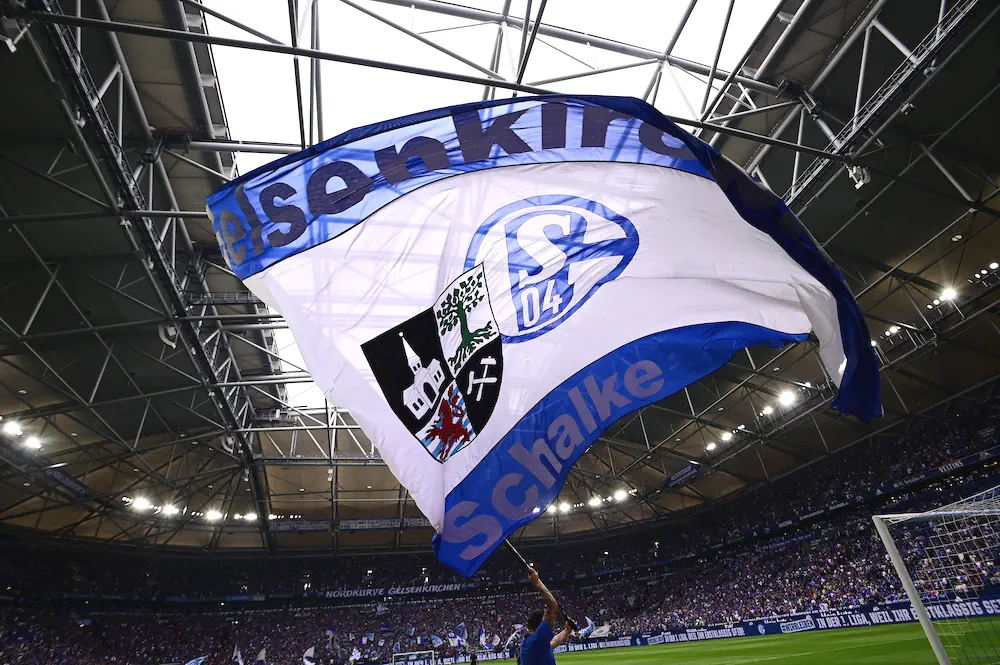
Schalke 04 is a curious case, as it won a European competition despite never having won the Bundesliga (although they do have seven top-tier league titles from before the Bundesliga was formed). The club is one of the oldest and most traditional in Germany, with a rich history and, for several periods, a regular in European competitions.In 1997, they reached the UEFA Cup final against Roy Hodgson's Inter Milan, which boasted names like Zamorano, Djorkaeff, Javier Zanetti, and Paul Ince. The German team won the first leg 1-0, and Inter won the second, leading to a penalty shootout, where Schalke prevailed 4-1.
In 2021, they were relegated to the 2. Bundesliga, but just one season later they were back in the top tier, although that return also meant another relegation, and to this day, they remain in the German second tier.
Update: Schalke 04 won the 2. Bundesliga in the 2025/26 season and are now back in the Bundesliga.
FC Girondins de Bordeaux
Another historic club, this time from France, is Bordeaux, which boasts four Coupe de France titles, three Coupe de la Ligue trophies, and six Ligue 1 titles, the last in 2009, with Yoann Gourcuff as its star player. Names like Alain Giresse, Jean Tigana, and Christophe Dugarry have graced the club, bringing success at different times.In 1996, they overcame clubs like Real Betis and AC Milan to reach the final against Bayern Munich. That Bordeaux team featured Zinedine Zidane as its star player, along with Dugarry and Bixente Lizarazu. The German team comfortably defeated Girondins 5-1 on aggregate to win that edition of the UEFA Cup.
In 2022, after a disastrous Ligue 1 season, the club was relegated from the top flight. The problems continued, and in 2024 financial issues led to bankruptcy proceedings, the loss of professional status, and a fall to National 2.
FC Carl Zeiss Jena
Perhaps for those unfamiliar with German football, Carl Zeiss Jena might not be a well-known team, but it's another club with over 120 years of history and was one of the leading teams in the East German league. They were champions of the DDR Oberliga three times and finished second or third on 14 other occasions.In the 1980-81 Cup Winners' Cup, they overcame several major clubs, including AS Roma, Valencia, and Benfica, to reach the final against Dinamo Tbilisi, who at that time were competing as representatives of the now-defunct Soviet Union. The German club took the lead in the single-leg final, but Dinamo managed to come back and win 2-1 to claim the European trophy.
After the fall of the Berlin Wall, the club started in the 2. Bundesliga, but over the years it has fallen down the standings to its current position in the Regionalliga (fourth tier).
Middlesbrough FC
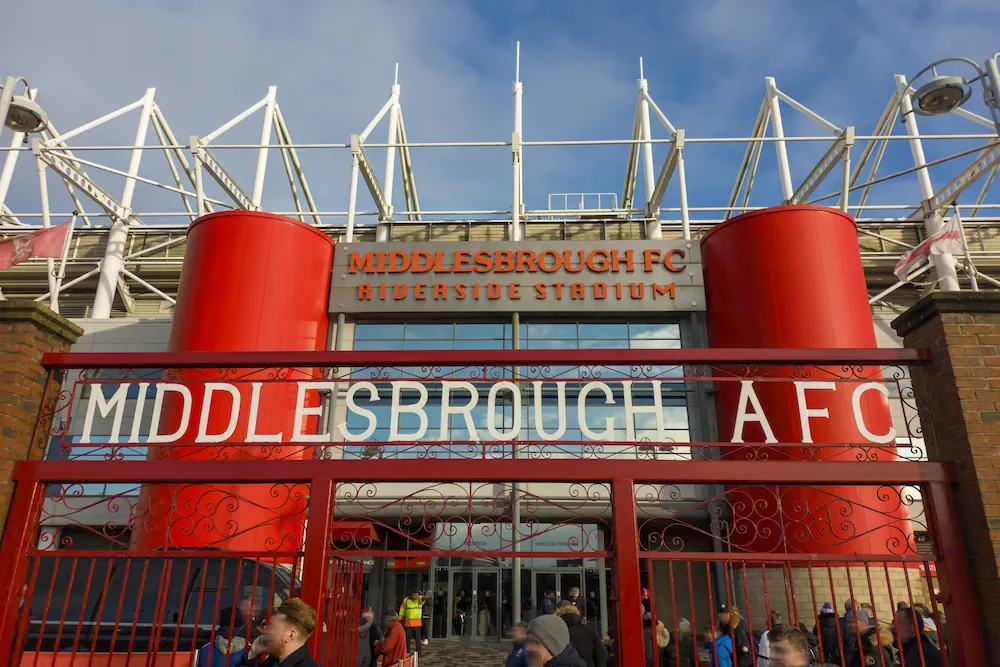
Middlesbrough was founded in 1876, and the club has spent much of its history in the first and second tiers of English football, though it hasn't been a particularly successful team, boasting only one League Cup as a major trophy.In the 2004-05 season, they finished seventh in the Premier League, which qualified them for the first round of the following season's UEFA Cup. That team was managed by Steve McClaren and featured players such as Jimmy Floyd Hasselbaink, Mark Viduka, Gareth Southgate, and Stewart Downing. They progressed through the rounds until reaching the final, where they faced the toughest possible draw in the competition: Sevilla. The Spanish team comfortably defeated them 4-0, winning their first UEFA Cup and beginning a run that would make them the competition's most successful club.
Just three years later they were relegated and apart from a brief return to the Premier League in 2016-17, they have remained "stuck" in the Championship (second tier).
TSV 1860 Munich
While the club 1860 Munich as a sports institution boasts a 165-year history, its football section is "only" 127 years old and is the other major team in Munich. The 1960s were its golden age, as they won the Bundesliga for the first and only time to date in the 1965-66 season, finishing as runners-up the following season.However, what brings them to this list is their outstanding performance in the 1964-65 Cup Winners' Cup, where they reached the final after defeating teams like Porto. Their opponent was West Ham United, featuring Bobby Moore and Geoff Hurst, who prevailed 2-0 with a brace from Alan Sealey.
The following decades were difficult for the club, as it gradually fell as far as the 3. Liga (third tier).Although they had a resurgence in the late 1990s and returned to the Bundesliga, they started their downward journey again in the mid-2000s, and today they are back in the 3. Liga.
Real Zaragoza
The Aragonese side Real Zaragoza were a regular fixture in the top tier of Spanish football and even European competitions for much of the 20th century. The 1994-95 season brought what is arguably the most important moment in the club's history: they reached the Cup Winners' Cup final against Ian Wright's Arsenal. They won 2-1 after a 1-1 draw in regulation time, but thanks to Nayim's memorable goal in the 119th minute, they were crowned champions of the tournament. In the 21st century, they have had some high points, such as the team featuring the Milito brothers and Pablo Aimar, to name a few, but the low points have far outweighed them.After a couple of stints in the Segunda División, they finally fell, spending more than a decade in that category. Currently, due to financial and administrative problems, they have been close to the relegation zone.
Update: On 24 May 2026, Real Zaragoza were relegated to Primera Federación, Spain's third tier.
Stade de Reims
Although not all football fans may know about it, Stade de Reims is a historic club that has been crowned French champion six times, thanks to those great teams of the late 1940s, 1950s, and 1960s, which boasted some of the biggest names in international football, such as Raymond Kopa and Just Fontaine.Thanks to their league titles in 1954-55 and 1957-58, they qualified for the European Cup in the following seasons. These were their first two appearances in official European competitions, and on both occasions, they reached the final. However, it wasn't all smooth sailing, as on both occasions, their opponent was Real Madrid, led by Di Stéfano, who defeated them 4-3 in the first and 2-0 in the second.
From the mid-1960s onward, a period of inconsistency began, culminating in the team's relegation to the fourth tier in 1991 due to financial problems. The following decades meant a long road that took them back to the top tier, even returning to play in a European competition in 2020. In 2025, they finished 16th in Ligue 1, then lost the relegation play-off and were relegated.
©
Ipswich Town FC
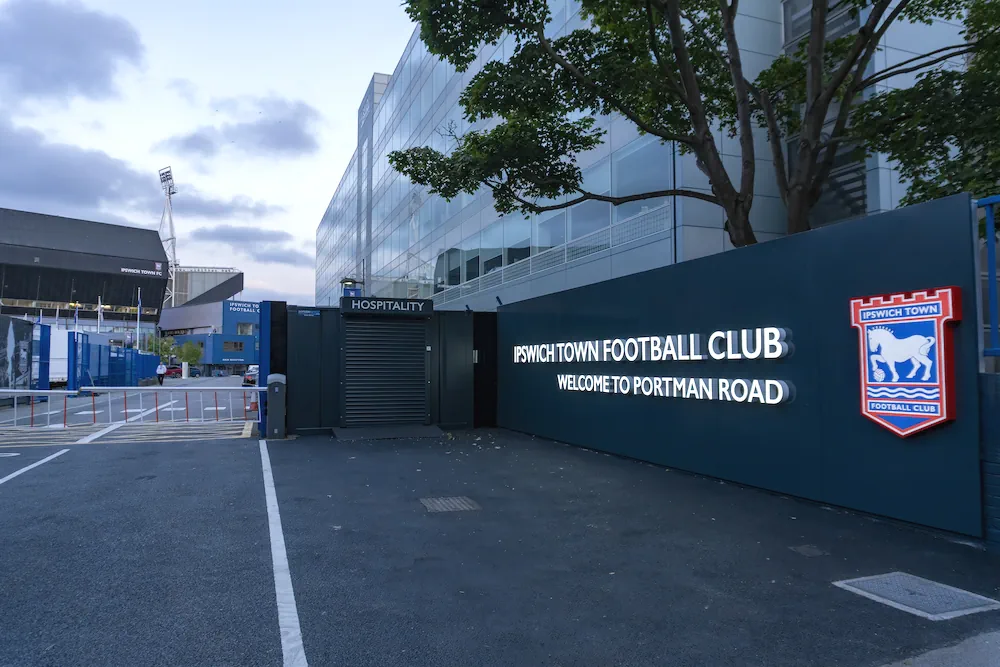
Although the club was formed in 1878, they only joined the Football League in 1938, and their history has been marked by inconsistency. Ipswich Town were First Division champions in 1961-62 but have also played in the third tier of English football.In the 1980-81 season, Sir Bobby Robson's memorable Ipswich team won the UEFA Cup against AZ Alkmaar with a 5-4 aggregate score. After Robson left the club to manage England, Ipswich became a regular in the second tier, and it wasn't until Kieran McKenna arrived that he led them to a two-tier promotion and back to the top tier in the 2024-25 season. However, their stay there lasted only a year, and they are now back in the Championship.
Update: In the 2025/26 season, Ipswich were promoted straight back to the Premier League after finishing second in the Championship.
Fortuna Düsseldorf
Another club that can boast of having experienced both the heights of glory and the depths of despair. Fortuna Düsseldorf is also a century-old club that once dominated regionally and was crowned German champion in 1933.Its golden era was in the 1970s when they battled for the top spots in the Bundesliga, and especially in 1979 when they reached the Cup Winners' Cup final against Barcelona. The match ended 2-2 after 90 minutes, with Fortuna equalizing every time the Spanish side took the lead. In extra time, Barcelona scored two goals to secure the victory, despite Fortuna pulling one back.
By the late 1990s, they were in the Bundesliga and began a decline that led them to the Oberliga Nordrhein (the fourth tier at the time) in the mid-2000s. Although they managed to recover, and even reached the Bundesliga again, they are currently in the 2. Bundesliga.
Update: Fortuna Düsseldorf finished 17th in the 2025/26 2. Bundesliga and were relegated to the 3. Liga.
AS Saint-Etienne
Saint-Étienne could easily quote Mourinho and say they're not just any club, that they're special, and they'd be right. For a long time, the Greens were the most successful club in French league history (until PSG, fueled by petrodollars, took the record). They can also boast of having had some very important names in football, like Michel Platini, and, most importantly, they reached a European Cup final.In 1976, the French team faced Bayern Munich in the final of the top continental competition, a team that included legends like Sepp Maier, Franz Beckenbauer, Karl-Heinz Rummenigge, and Gerd Müller. Bayern Munich beat Saint-Étienne 1-0, and that was the difference that prevented the French from becoming European champions.
Although they have spent much of their history in Ligue 1, a poor 2024-25 season saw them relegated to Ligue 2.
UC Sampdoria
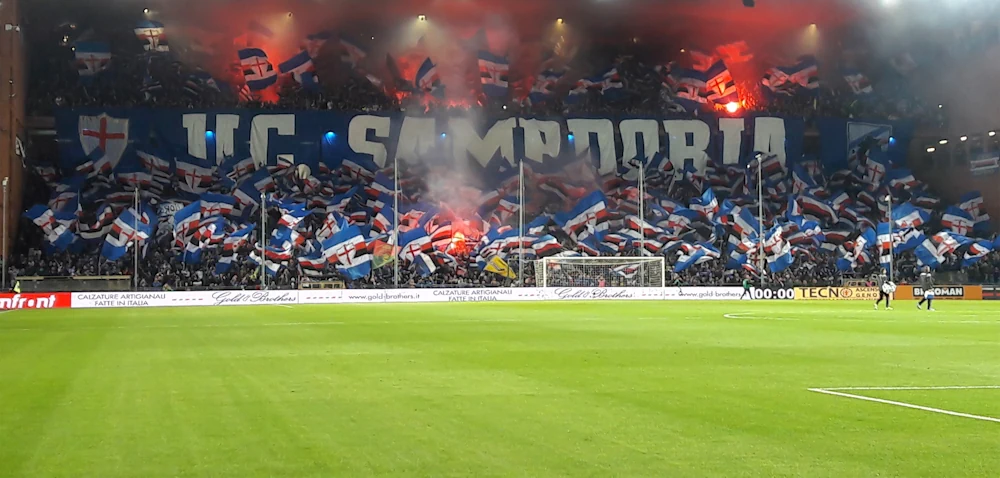
Here we have a club younger than the previous ones, but one that reached a higher peak and remains impressive to this day. The Genoa team Sampdoria was a regular in Serie A for much of its history, but its trophy cabinet wasn't particularly extensive.That was until the mid-80s when they began winning the Coppa Italia, first in 1985 and then in 1988, which allowed them to play in the following edition of the Cup Winners' Cup. They reached the final but lost to Barcelona, then coached by Cruyff. In 1989, they won the Coppa Italia again, returned to the Cup Winners' Cup, and reached the final once more, this time winning it against Anderlecht. In 1991, they won Serie A for the first (and last) time, which led them to the European Cup, where they also reached the final. It was in this final that Barcelona defeated them in extra time with Ronald Koeman's free-kick goal, securing the Catalan club's first European Cup.
After numerous problems during Massimo Ferrero's tenure, Sampdoria were relegated to Serie B in 2023.
1. FC Magdeburg
The current FC Magdeburg is a relatively new club compared to the others in this article, having been founded in 1965. Before the fall of the Berlin Wall, the club was one of the best in the DDR-Oberliga, which they won three times.As winners of the FDGB-Pokal (East German Cup) in 1973, they qualified for the 1973-74 Cup Winners' Cup, where they faced AC Milan, featuring Giovanni Trapattoni and Gianni Rivera, in the final. To the surprise of many, the German team defeated the Italian team 2-0, securing the only Cup Winners' Cup title for East Germany.
After the fall of the Berlin Wall, Magdeburg started in the third tier of German football and later moved up to the fourth. From there, they began a climb through the various levels, which has led them to their current position in the 2. Bundesliga. To date, they have not yet played in the Bundesliga.
1. FC Lokomotive Leipzig
The history of 1. FC Lokomotive Leipzig is as extensive as it is varied. The club's first incarnation, VfB Leipzig, was, interestingly, the first German league champion in 1903. The team underwent several name changes throughout its history, but until the fall of the Berlin Wall, it was always a team that enlivened the tournaments of East Germany.In 1987, they played in the Cup Winners' Cup final against Ajax, featuring Marco van Basten, Frank Rijkaard, and a young Dennis Bergkamp, and managed by Johan Cruyff. The Dutch team won 1-0 with a goal from Van Basten, and this symbolically marked the end of the club's golden era.
After German reunification, they began competing in the 2. Bundesliga, but they faced numerous difficulties, and by the early 2000s, the club had practically disappeared. In 2003, a group of fans decided to revive it. This meant starting from the very bottom of German football, and although they have been able to climb levels, they are currently in the Regionalliga (fourth tier).
FC Dnipro
Here we're talking about the most unique case on the entire list, which is why we've left it for last. Here we have a club that was once champion of the Soviet Union league and later a runner-up in the Ukrainian league.For a time, FC Dnipro had the financial backing of Ihor Kolomoyskyi, which allowed the club to compete at a high level, even reaching the final of the 2015 Europa League. While Dnipro had good players like Yevhen Konoplyanka and Nikola Kalinic, their opponent was the competition's most successful club, Sevilla. The team, then managed by Unai Emery, won the decisive match 3-2.
Just a year later, Kolomoyskyi announced that the club's investment strategy would change from that moment on, and it seems that this resulted in non-payment to players, the manager, etc., which led to FIFA sanctions, financial collapse, and, in 2019, the disappearance of Dnipro.