
Daniel Passarella Argentina's Only Two-Time World Cup Winner
The fact that your nickname, The Argentine Kaiser, comes from a legend like Franz Beckenbauer already says a lot, but if we add that you are the only Argentine player to have been part of two World Cup-winning squads, despite all the great names that have passed through the national team (Diego Maradona, Lionel Messi, Mario Kempes, etc.), and that you are the second highest-scoring defender in football history, we can only be referring to one man: Daniel Passarella.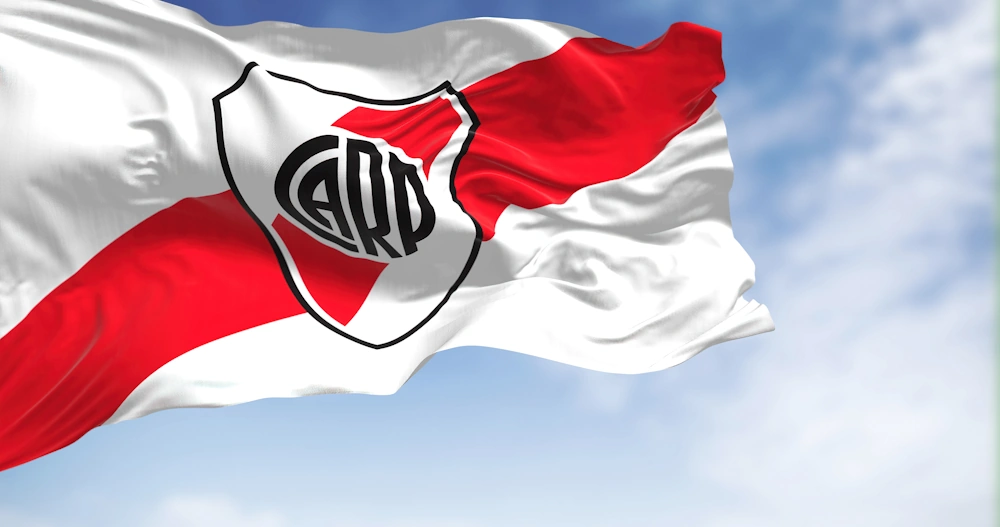
River Plate is the club where Passarella is a legend
The Playing Career
He was born on May 25, 1953, in Chacabuco, Buenos Aires Province, and began his football career as an advanced playmaker, the classic Argentine number 10. That position didn't last long, and he gradually moved back to play as a defender. He had trials with several clubs, including Independiente, Estudiantes de La Plata and Boca Juniors, but did not make the cut. He eventually got his chance at CA Sarmiento at the age of 18, initially with the youth teams.With the Junín-based team, he found consistent playing time in the Primera C, at that time the third tier of Argentine football. At 20 years old, he managed to establish himself with the first team, scoring 9 goals in 36 games, very good numbers for a defender, something that would be a constant in Passarella's career.
This caught the attention of River Plate, who finalized his signing for 1974. It's important to mention that at this point, the club hadn't won an official title in 17 years. His debut would be in January 1974 against their eternal rival, Boca Juniors, in a summer tournament. Legend has it that Nestor "Pipo" Rossi, River's manager who had just returned to the club, asked Passarella if he dared to debut against Boca, and the defender replied: "I dare, the question is whether you dare to play me". His strong performances allowed him to establish himself in the starting eleven, playing on the left side of the defence. In a Metropolitano tournament match, he even scored a penalty hat-trick against Altos Hornos Zapla.
However, by 1975, he began the season as a substitute, refusing to continue playing on the left, especially since the club had made significant signings for the defense, such as Pablo Comelles and Hector Artico. Despite this, he continued to make the most of his playing time, contributing both defensively and offensively, scoring several goals. That year, River Plate's title drought ended, winning both the Metropolitano and Nacional tournaments.
In 1976, an injury to Comelles opened the door to the starting lineup for him, and he never relinquished it. That year he would score 24 goals in 35 games, an absolute record for a defender in Argentine football, in addition to being among the top 8 scorers in both of the annual tournaments that were played at that time in the South American country.
That same year he made his debut with the senior national team (he had already played with the youth teams, having won the Toulon tournament) and began to become a regular in Cesar Luis Menotti's call-ups.
By 1978, he was one of the main figures of River and also of the national team, so he was an important part of the team that played in the FIFA World Cup that year. Passarella was the captain who led the Argentine national team to that first world championship, becoming the first Argentine captain to lift the World Cup trophy.
After nine years and seven league titles with River Plate, in 1982, following the FIFA World Cup that year, the Kaiser was signed by Fiorentina. His performance steadily improved with each passing season, establishing himself as one of the team's top scorers in his second, third, and fourth years in Italy. In the 1985/86 season, he set the record for the highest-scoring defender in Serie A, a record that stood until 2001 when Marco Materazzi surpassed it with Perugia. He also became the club's all-time leading scorer among defenders and one of the highest-scoring defenders overall.
In the summer of 1986, he was part of Carlos Bilardo's squad for the World Cup in Mexico, although he did not play in the tournament. In that edition, Argentina would go on to win the championship with Diego Maradona playing at an impressive level, making Passarella the only Argentine to have won the World Cup twice to date.
As had been the case throughout his career, after a World Cup he would change teams; in this instance, he left Fiorentina to go to Inter Milan. The Milan club was not in a particularly strong period, although Passarella managed to score 15 goals in two seasons. After two years, he returned to River to retire as a professional, becoming the highest scoring defender in the club's history and, at that time, the highest scoring defender in the history of football (shortly afterwards he would be surpassed by Ronald Koeman).
The Managerial Career
In 1989, he retired as a professional footballer and that same year took over as manager of River Plate. In his first tournament with the club, he won the Primera División title, winning 10 matches, drawing nine, and losing only one. Besides the title, Passarella gave opportunities to several players who would become important for River, such as Gustavo Zapata, Leonardo Astrada, and Fabián Basualdo.In 1994, he became the manager of the Argentine national team, although in this role, he was unable to replicate the success he had enjoyed as a player for the Albiceleste. In the 1998 FIFA World Cup, they reached the quarterfinals, where they were eliminated by the Netherlands, thanks to Dennis Bergkamp's memorable goal, in which he controlled a long pass from De Boer, cut inside past Ayala, and finished with the outside of his foot.
During his time with Argentina, he had some controversies due to his particular demands on the players regarding their appearances, such as asking Fernando Redondo to cut his hair, which the player refused and ended up resigning from the national team. His managerial career would continue with coaching the Uruguay national team, a brief stint at Parma in Italy, coaching Monterrey (where he would become champion of Mexico), Corinthians (managing the team that had Carlos Tevez and Javier Mascherano) and a return to River.
The President of River Plate
In 2009, he won the election to become president of River Plate, defeating his eventual successor, Rodolfo D'Onofrio. Passarella inherited a club in dire straits, and this, coupled with certain decisions he made himself, ultimately led to River's relegation in 2011.The Kaiser managed to return the team to the First Division, although his image within the club was tarnished by the relegation, and the remainder of his tenure failed to rebuild his standing among supporters. In 2013, he ended his term as president and did not run for reelection.