
Chicharito's Chivas Years Before His European Breakthrough
Javier Hernandez, known as "Chicharito", is one of the most underestimated strikers of his generation, having delivered time and time again for various clubs. His time with Manchester United, alongside his first season with Bayer Leverkusen, is widely considered his peak as a player and the period where he made a name for himself across European football. However, everything began back in Mexico for him.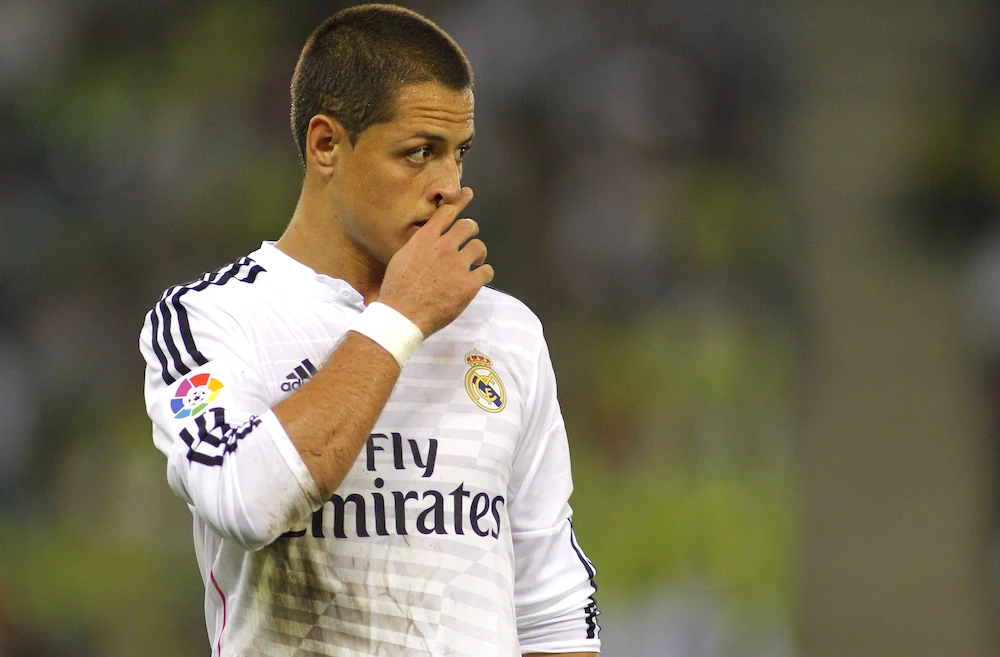
Chicharito - here while playing for Real Madrid
Family Legacy and Formation
Born in Guadalajara, Jalisco, Mexico, on June 1st, 1988, Javier hails from a family of footballers. He is the grandson of former striker Tomás Balcázar, who played for Chivas Guadalajara during the 40s and 50s (winning eight league titles during that era) while also representing Mexico during the 1954 World Cup. On the other hand, his father, Javier Hernández Gutiérrez, played for three clubs in Mexican football and played for his country during the 1986 World Cup, which also happened on home soil.Coming from this background, Chicharito, who had this nickname given as a reference to his father's ("Chicharo"), started to play football in Morelia because the latter was still playing there. However, he would switch to Chivas when he was nine years old, slowly making waves as a player, although he began as a right winger instead of the striker he would become known for.
"I was lucky enough to be there when Chicharito arrived at Chivas when he was 9 years old," said Jose Luis Real, the coordinator of Chivas' youth system, back in 2015. "Javier's father brought him for a tryout, and he passed it immediately. He wasn't a center forward back then; he played as a right winger, more like a number 7. He wasn't a player who did a lot of tricks or held onto the ball for long periods. He would receive the ball and be quite direct... very vertical in his play. That was very unusual because in Mexico, wingers tend to try a lot of plays, and Javier didn't."
Chivas' manager of the senior team at the time, José Manuel "Chepo" de la Torre, had a different perspective regarding his development back then.
"We brought him straight into the first team, and suddenly, he was one-on-one with the goalkeeper three or four times and he either whiffed on the shot or sent it out for a corner because he was rushing things too much," Chepo de la Torre told TUDN in 2020. "To begin with, we have a motto with many players: 'son of a footballer, you have to make him fight' and 'grandson and son of footballers, he must have something going for him'".
Rise to Stardom
The interesting part about Chicharito's development, especially when compared to modern football, is how slow. Despite making his professional debut and scoring a goal in 2006, being a part of a Chivas-winning side that year, Hernandez would spend the bulk of the next four years mostly playing as a backup and not having a major role to perform.This might seem odd in hindsight, but it makes sense with de la Torre's comments regarding how he needed to improve and how he was constantly rushing things. Furthermore, when considering how he missed the U-17s World Cup because of an injury, a tournament that Mexico would end up winning, it could easy to assume that Hernandez was struggling with confidence issues, but the 2009/10 period of his career would change things forever for him.
It would be during this period where Chicharito would score 21 goals in 28 matches across all competition matches, suddenly becoming the rising talent in Mexican football. This rise in his performances would lead to him joining the national team and play in the 2010 World Cup in South Africa.
"Much more, my life changed radically in three months, not even in FIFA (the video game) when you play career mode," Hernandez said in 2020 when looking back at his career, as reported by TUDN. "When the Bicentennial tournament starts and you start doing things right, the call-up comes, the tournament ends in three months, I don't complete it, I make the cuts and stay on the final list, I didn't even have two weeks of vacation, I couldn't leave my house because of all the people who were going to visit me."
He would end up scoring against France in the group stage during a 2-0 victory, mirroring his grandfather who did likewise in 1954. Moreover, he would also score against Argentina during the rounds of 16, although the match would end up with the Mexicans losing 3-1.
However, the best was yet to come for the striker...
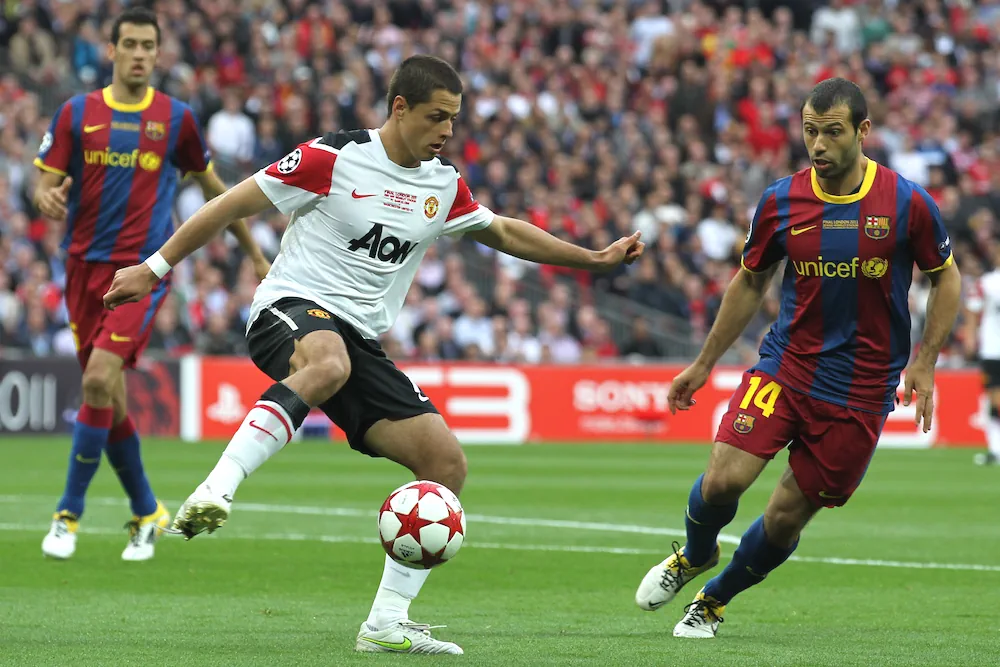
Javier Hernandez when he was playing for Manchester United
Signed by Manchester United
During a transfer deal that was kept in secret for months, including some of Hernandez's own family, he would agree a deal to sign for Manchester United during April of 2010. This would make him the first Mexican to ever play for the club and also allowed the Red Devils to capitalize on his development before his profile got bigger after the World Cup. This deal would also include a friendly match with Chivas to open their new stadium.Furthermore, this would mark the beginning of a long and successful career for the Mexican in Europe, which is something that Ferguson already envisioned.
"I am delighted to have reached a deal to sign such an exciting young striker" Sir Alex Ferguson said in 2010, as per the BBC. "He has been in prolific form for both his club and his country. He will be a great addition to our squad and we look forward to welcoming our first Mexican player in the summer."
And that he did, so we can all agree that his beginnings were signs of things to come.